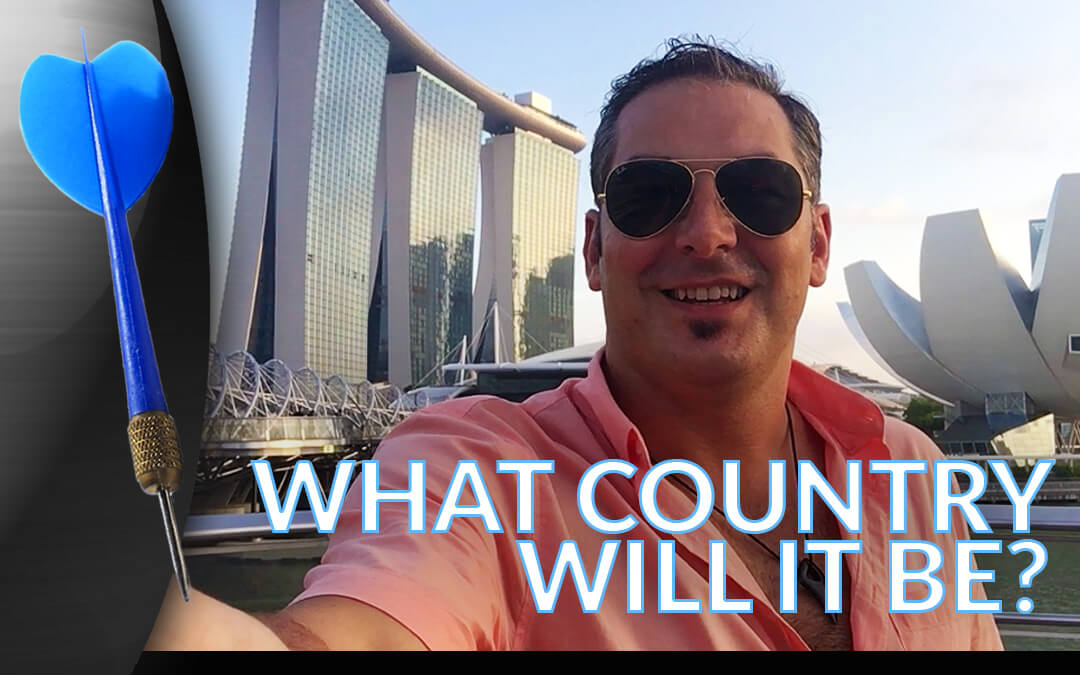
Oops, I did it again. I threw a new dart at the world map while visiting Singapore, one of the most beautiful cities I have ever seen!
Watch the video below to see what happened.
As you can see the dart ended up in the middle of the Atlantic Ocean and the closest land mass was Bermuda. Guess what? I just went there and filmed one of the coolest episodes of Travel by Dart!
Travel With Me and Check Off Your Bucket List Items
While you are reading this I am traveling around the world, filming more episodes. Life is short. You can travel with me to my next adventures. I am going to the 6 exotic destinations below within the next 12 months, so why don’t you join me while we’re being followed by a camera? To every single country, I will go with an exclusive group of only 10 people (selected applicants only). I call it The Spark Experience. It’s for those people who work hard and rarely treat themselves, is for those who don’t want to have regrets, is for those who want to do something they’ve never done before. Is that you?
Ever considered going to Indonesia? If you haven’t, you should. It is a fantastic country that welcomes you with open arms. Whether looking for cultural immersion, party or simply to rest in an exotic spot, this place has it all. I just visited Indonesia and had an amazing experience on a pirate ship then spent another fantastic week in Bali, but my only regret was that I didn’t get to see any Indonesian Buddhist temples.
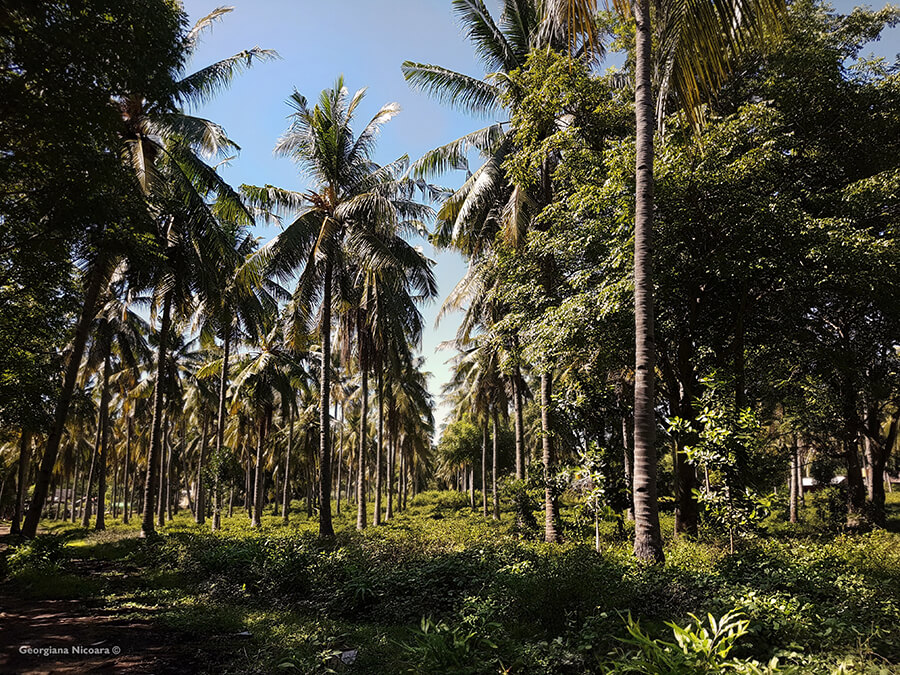
Luckily, my friend Georgiana Nicoara was there as well just a few weeks before me, and she offered to write this guest blog post about traveling around Indonesia and visiting the world’s largest Buddhist temple, Borobudur. Plus many other breathtaking sites (see all the pictures below).
She was there to study the Borobudur Temple Compounds, which is a UNESCO World Heritage Site located in Java. Here is Georgiana, introducing you to the best places to visit in Indonesia, her day-by-day itinerary, and a couple of must-know tips if you’re traveling to this beautiful country:
Borobudur Temple Compounds: An Indonesian Tour
I gotta start by saying that an ideal visit to Indonesia should be about a month. For anything beyond that, their government requires you to obtain a different visa that you must pay for. For the one month stay, you do not need to get any visa, though you should check with the airport officials upon arrival.
The exit fee is also usually included in the ticket price, but you should ensure to have the equivalent of $10 with you, just in case (currency info below). Whenever you depart from an Indonesian airport (Jakarta, Denpasar, etc.), you must have your printed ticket or flight schedule with you on hand to show security for them to allow you to enter the airport (I was there with my mom, for the first part of the trip).
Carrying on, you go through a quick bag screening upon entry in the airport then continue as per usual. The check-in booths for your flight open only two hours before departure. The check-in areas lack chairs depending on the airport. Do not arrive excessively ahead of time or you will be standing for a long time.
Taxis in Indonesia
If you consider taking a cab from the airport to your hotel make sure that the taxi is called Blue Bird. It has a black band above the windshield. The ones without the band are fake taxis.
Before starting the trip, ask the driver if his taxi is metered, by saying “Argo?”. Also, show the driver the address, as pronunciation is difficult in Bahasa Indonesia and you may end up at a completely different hotel. Classic taxi trick.
Ask the driver to lock the doors when you are driving, as some people have had issues with random people jumping in the taxi, or trying to rob them.
Cars drive on the left side of the road in Indonesia.
Indonesian Currency
The country of Indonesia uses Rupees (IDR). The conversion is about $7US for 100 IDR. Everything is relatively cheap, and a lot of places do not accept large sums, so carry smaller bills with you, such as 100s and 50s.
Religious Visits and Customs
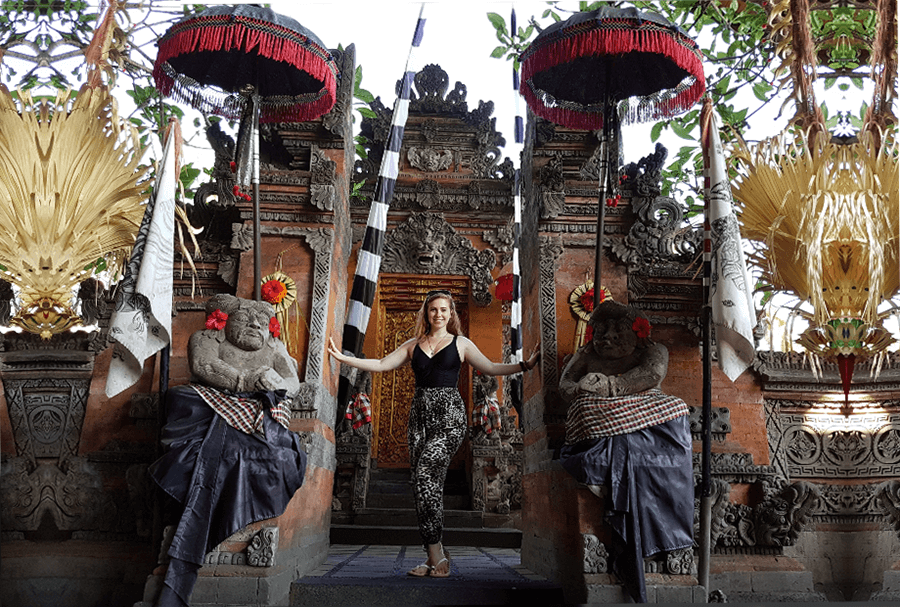
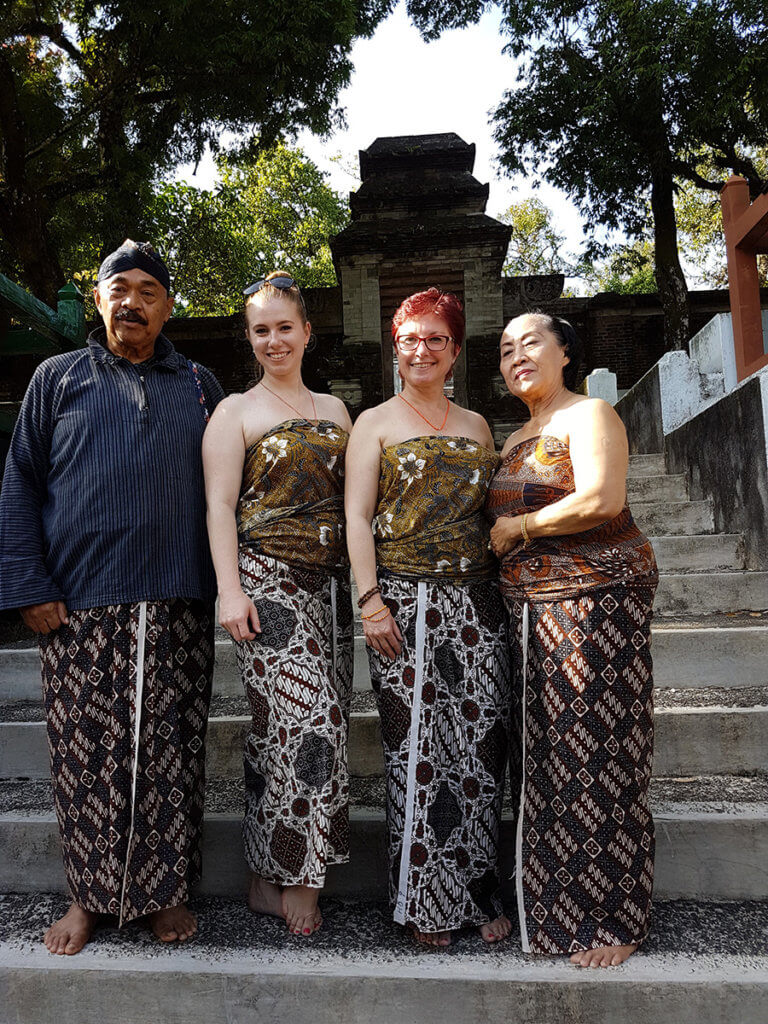
As in many other places, to visit a temple, you must be decently dressed. Most temples and sacred sites give out sarongs (shawls) for free. Do not be scammed by the people selling them in parking lots. You may be required to wear a sarong tied around your waist even if you have long pants on, depending on the place. Your best bet is to carry around your own just in case they don’t provide them.
In Indonesia, there is quite the mix of religions. Java is mainly Muslim, and you will hear their call to prayer five times a day at 4 AM, noon, 3 PM, 5 PM, 7 PM.
Bali is mainly Hindu, and they observe prayers three times a day, 6 AM, noon, and 6 PM. At this time, they place their offerings in the temples.
The temples in Java are mainly Buddhist, as the land used to be a Buddhist Dynasty several hundred years ago, and the temples in Bali are mostly Hindu. The Buddhist temples usually require a small entry fee unless you go to a more massive temple such as Borobudur, where the entry fee is more significant.
The Buddhist temples you can walk through freely, and into the offering rooms, and take photos, though stay away from taking pictures of the offerings themselves.
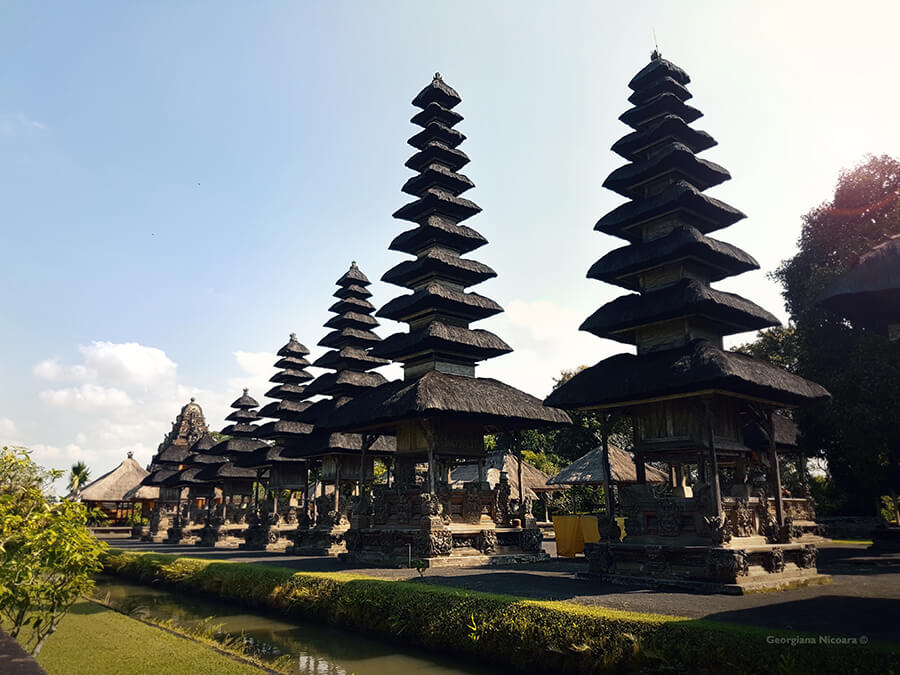
In Hindu temples, you have to pay as well, and you can usually walk around the temple grounds but not inside the temple area itself, as it is only open to the people who are praying. This situation became very frustrating after having made long trips to visit famous temples in Bali, and we were not allowed close to them. This was the case at Tanah Lot and the Uluwatu Temple.
Borobudur Housing
For our stay in Borobudur, we chose a homestay at the Nurudin House. He is a travel guide who has contacts for drivers and guides around Indonesia, along with his own home being open to guests.
He asked us a few questions and made our itinerary for us based on our preferences. As I was there for research on the Borobudur Temple, he arranged for us to meet with the Director of Conservation and was able to get us Special Guest passes which let us into various sights for free, with extended access to the temples.
Any tours you would like to partake in, I recommend booking them through Nurudin, as you will be paying significantly less, and you will have a familiar guide, whether it be Nurudin or his drivers. Our favorite was Saiful Ecko. He speaks English and has a very friendly and funny personality. He even had us over at his home for dinner.
Nurudin’s driver picked us up from the airport and took us to his house, which was about an hour and a half away. His wife provided us with dinner and lunch daily for 3 IDR per person, per meal. The breakfast was included in the homestay price.
Gili Trawangan, An Island Without Police Or Cars
This is one of the three little sister islands off of Lombok, along with Gili Air and Gili Meno. It is so tiny that it does not have any police on the island, or street lights when it gets dark. The island circumference is usually lit in the core entertainment area, but beyond that, it is pitch black.
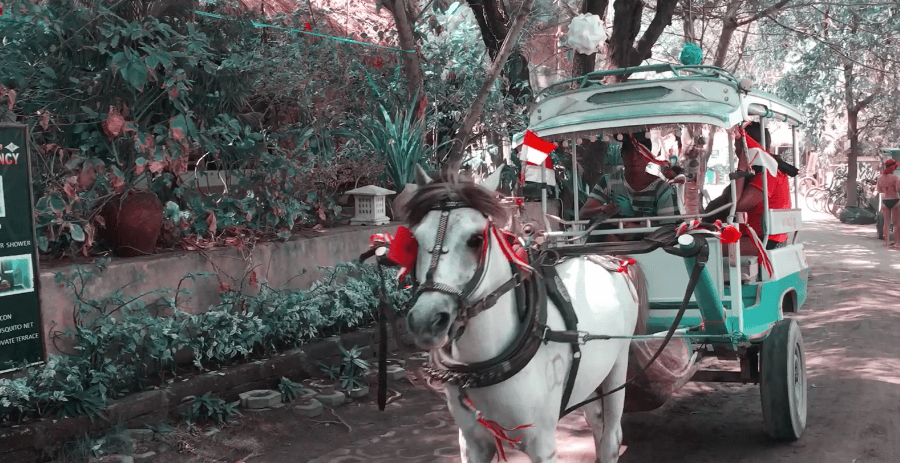
There is also no motorized transportation, so bike and horse carriage are the primary modes of transportation.
The traditional alcohol of the area is called Arak. This drink is usually supplemented with methanol to make it stronger and has caused several deaths. Avoid.
I found a lot of other drinks are a lot stronger than usual, to the point where you feel drunk off half a drink. Follow the crowds and stick to bottled drinks only such as beer.
Indonesia Itinerary: Overview
Each of the tours was done with Saiful, our driver, and guide. The cost per day included the fee for the car rental, gas, and his driving services, which usually came out to 450 IDR ($35US) per day – this was for two people.
The cost per day also sometimes had to include the entry into the specific sites which we were visiting. There were days we spent about $100US/person.
NOTE: Marked with ( *** ) are the most recommended places to visit.
Java, Indonesia
Day 1: *** Borobudur Temple Sunrise Tour
Day 2: Chicken Church, Karang Rego, Karang Anyar, Jawa Moah Sakeng Ndene, Punto Kendil, Wanu Rego
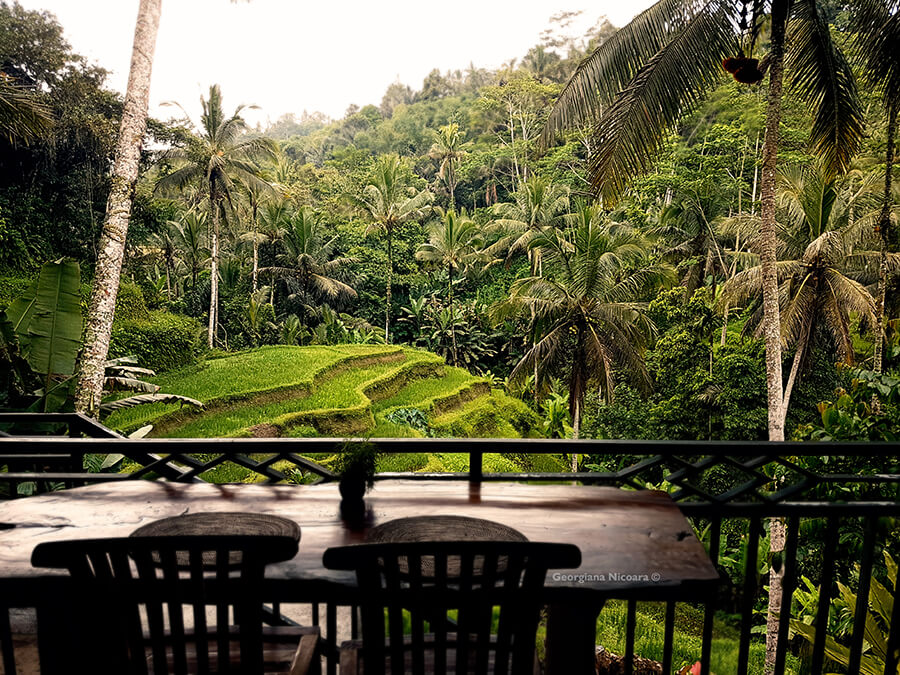
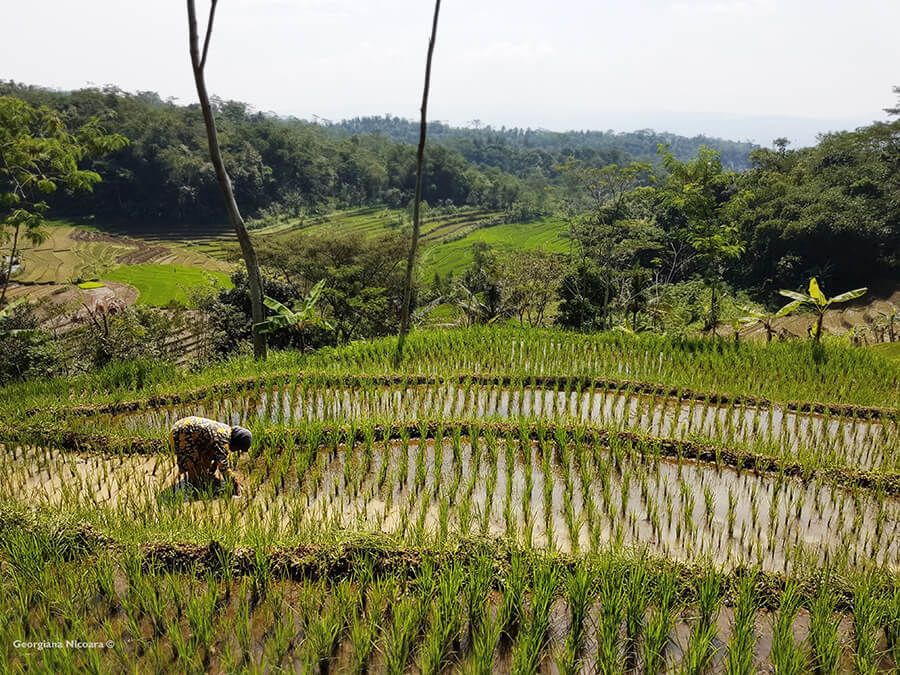
Day 3: *** Rice Fields
Day 4: Borobudur, Mendut, Pawon
Day 5: Waisak Festival
Day 6: Bicycle Tour
Day 7: Kotagede, Imogiri, Dafam Hotel
Day 8: *** Jomblang Cave
Day 9: Malioboro Mall
Day 10: *** Merapi Volcano
Day 11: *** Prambanan Temple, Sewu Temple, Plaosan Temples
Day 12-13: Malioboro Markets
Bali, Indonesia
Day 14: In transit to Bali
Day 15: *** Uluwatu Temple, Tanah Lot, GWK (Garuda Wisnu Kencana)
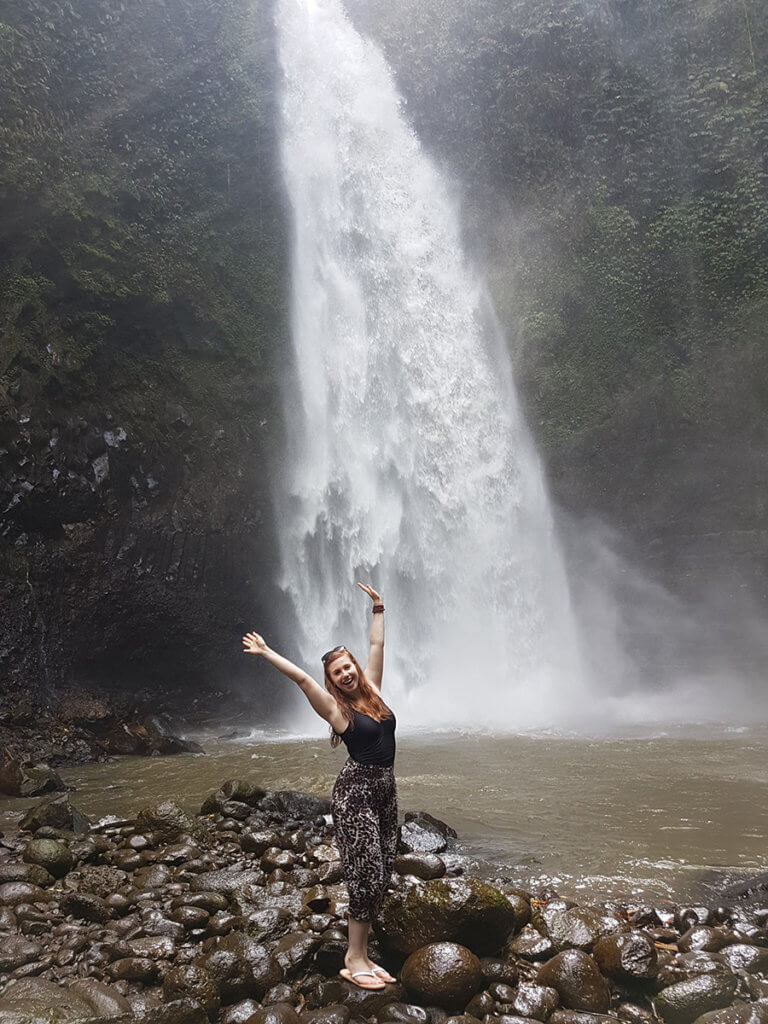
Day 16: *** Nungnung Waterfall, Barong Dance, Mengwi Temple
Day 17: Transit to Gili Trawangan
Day 18: *** Snorkeling, Reggae Bar
Day 19: Transfer to Ubud, Monkey Forest Markets
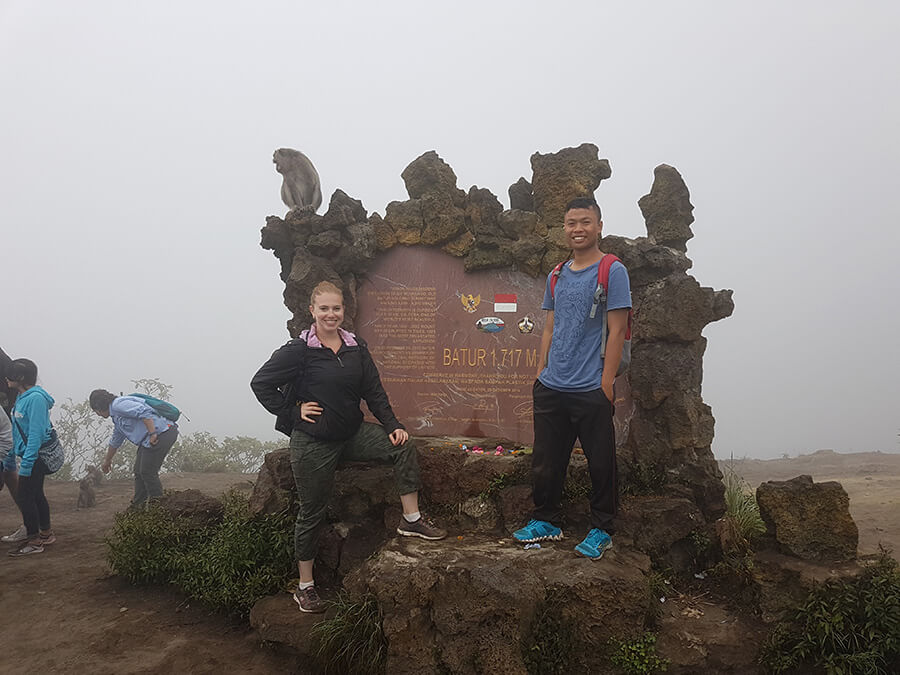
Day 20: *** Batur Volcano, Hiking Trip, Ubud Shopping
Day 21: *** Pura Tirtha Empul, Elephant Cave, Candi Tebing Gunung Kawi, Pengumuman
Day 22: Ubud Shops
Day 23: Flight Home.
Indonesia: Detailed Itinerary
Day 1: Borobudur Temple Sunrise Tour***
We did an amazing Borobudur Temple Sunrise tour at 4 AM, accompanied by Nurudin. It was followed by a small breakfast included in the price, plus Nurudin packs an extra little breakfast for his guests.
After a break and breakfast, we went back to the Borobudur Temple to take a closer look during daylight at the galleries and the platforms of the temple.
We started the day at 4 AM, and we finished visiting the temple at 6 PM. As this was my research site, we tried to make the most of our time there.
It usually costs about 450IDR ($35US) for one visit per person.
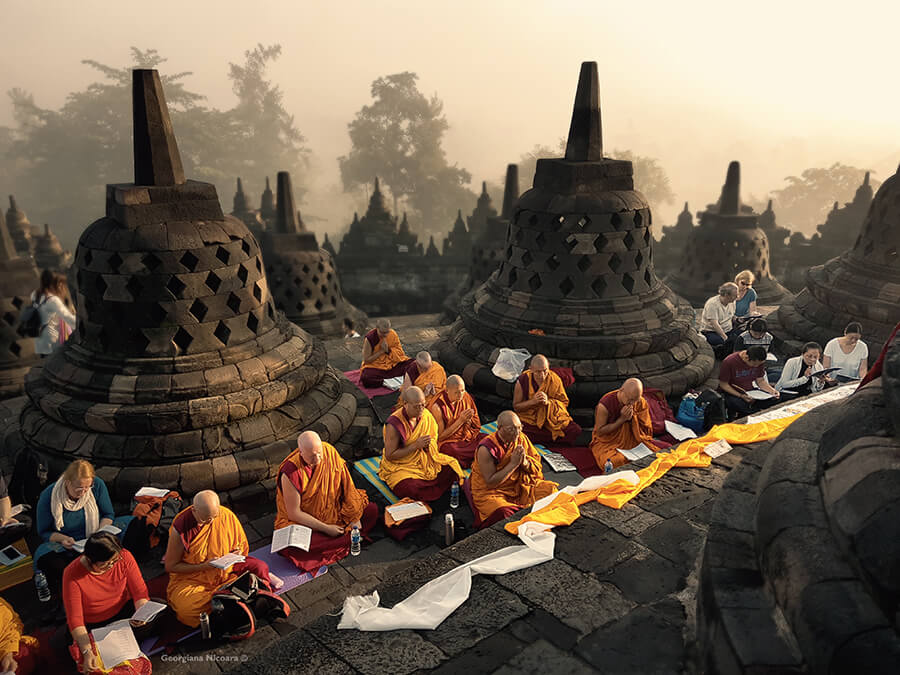
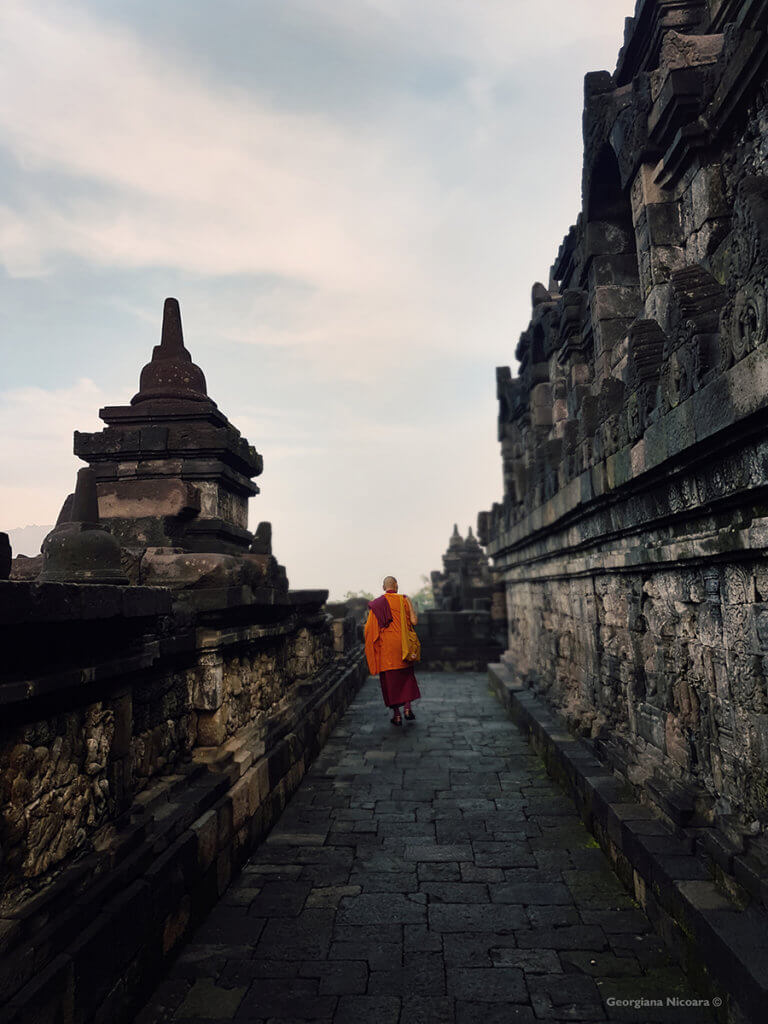
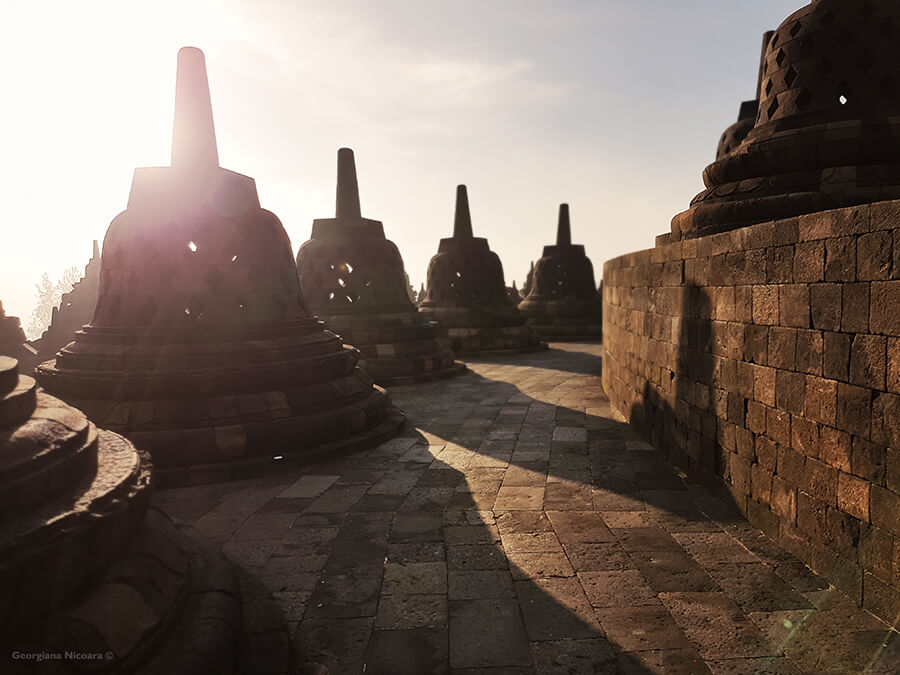
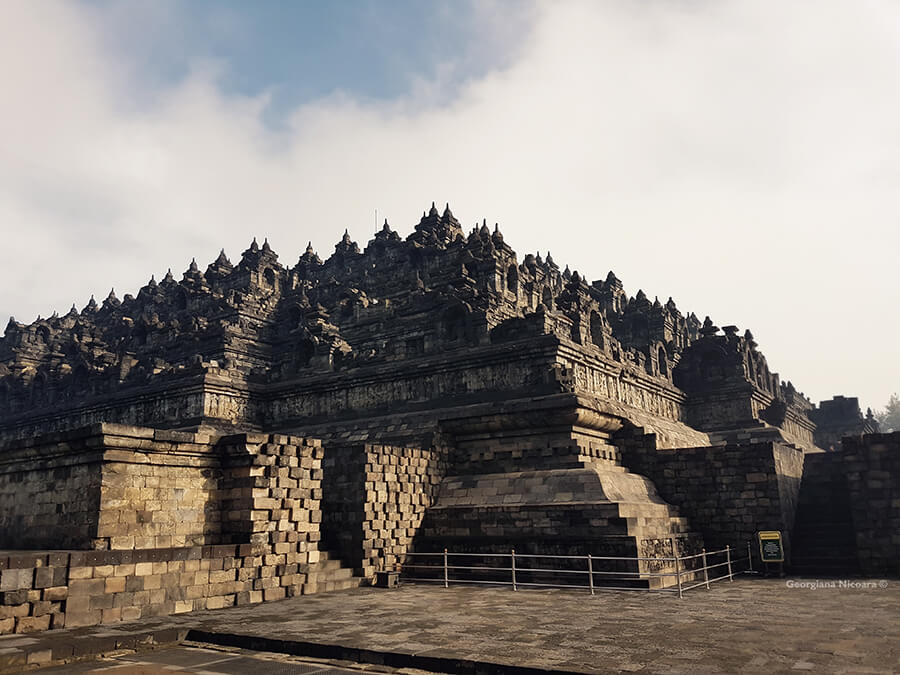
Borobudur is a 9th century Mahayana Buddhist temple located in Magelang, Central Java. According to Wikipedia, it is the world’s largest temple, consisting of nine stacked platforms, six square and three circular, topped by a central dome.
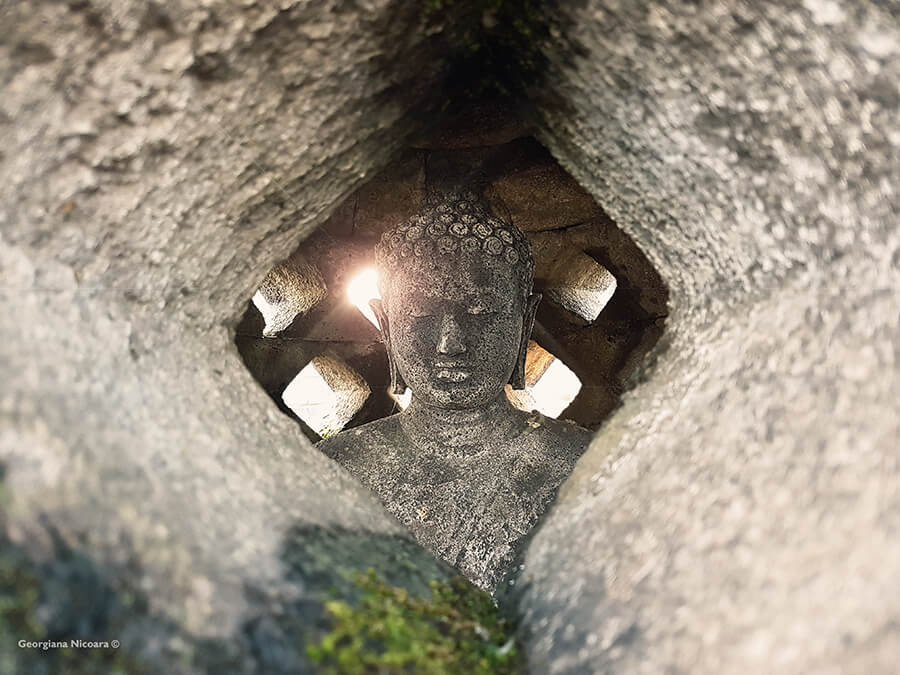
The monument is decorated with 2,672 relief panels and 504 Buddha statues. The central dome is surrounded by 72 Buddha statues, each seated inside a perforated stupa (see image below), which is a hemispherical structure containing relics that is used as a place of meditation.
Borobudur is Indonesia’s single most visited tourist attraction.
Day 2: Chicken Church, Karang Rego, Karang Anyar, Jawa Moah Sakeng Ndene, Punto Kendil, Wanu Rego
We took a quick visit to the Chicken Church, which had a small snack included with it. It’s quite a steep walk uphill to get to it from the parking lot.
There isn’t too much to see besides a church shaped like a chicken with a beautiful love story behind it, and the view of the Borobudur Valley from the top of it.
We continued to Karang Rego, which is a covered outdoor cafe, lounging area. The Indonesian government requires each little town to have one of these along with a series of homestays to improve their economy. We visited a series of these throughout our trips.
We went on to the village of Karang Anyar, which is a town known for its pottery. We stopped by a house and partook in some pottery making.
Next, we went to Jawa Moah Sakeng Ndene, a family who opens up their home to teach foreigners about Javanese music. They have a large room of instruments, which they show you how to play and sing with you. They are very open and pleasant, offering us tea and treats, and a beautiful view of the rice fields.
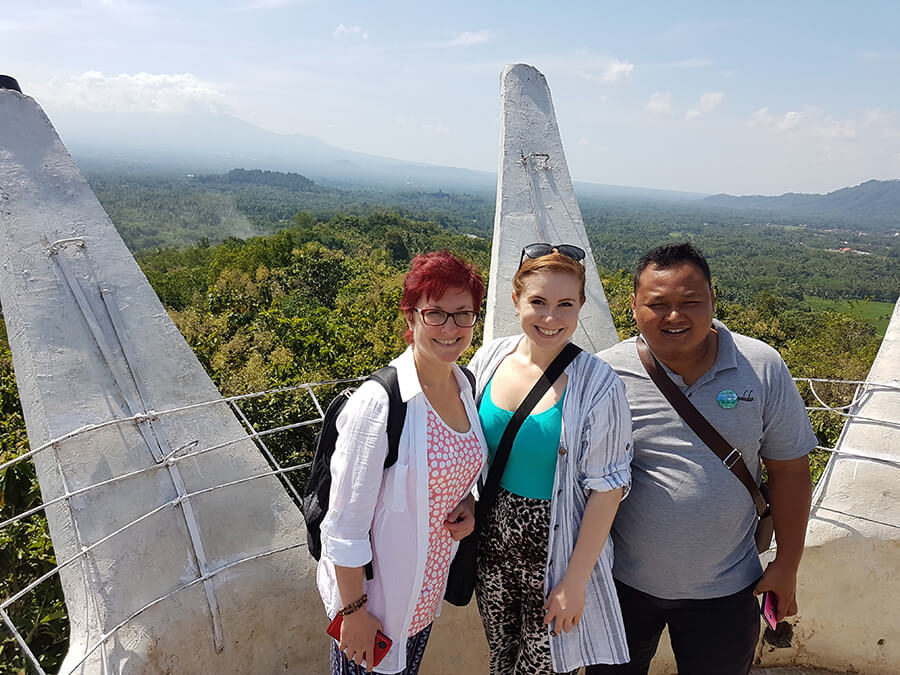
*** Punto Kendil was our next stop. This is the highest point from which you can see the entire valley. They have a series of treehouse like structures which you can climb on and take photos or just relax. This was a personal favorite stop.
We continued to Wanu Rego, another outdoor cafe, where we watched the sunset over the rice fields.
Day 3: Rice Fields***
What an experience. We visited the rice fields and climbed all the way up to the top of the mountain, to find Candi Selogriyo, a Buddhist temple overlooking the grounds.
We walked through the rice fields for about two hours on our way us and took the bike path on the way down. This was a beautiful sight, and one of my personal favorites.
Day 4: Borobudur, Mendut, Pawon
This was another research day at the Borobudur Temple. It was also the day where we received the Special Guest Passes. After a private tour with the Director of Conservation, we went to the Mendut Temple, which is one of a series of three temples usually experienced together (Mendut, Pawon, and Borobudur).
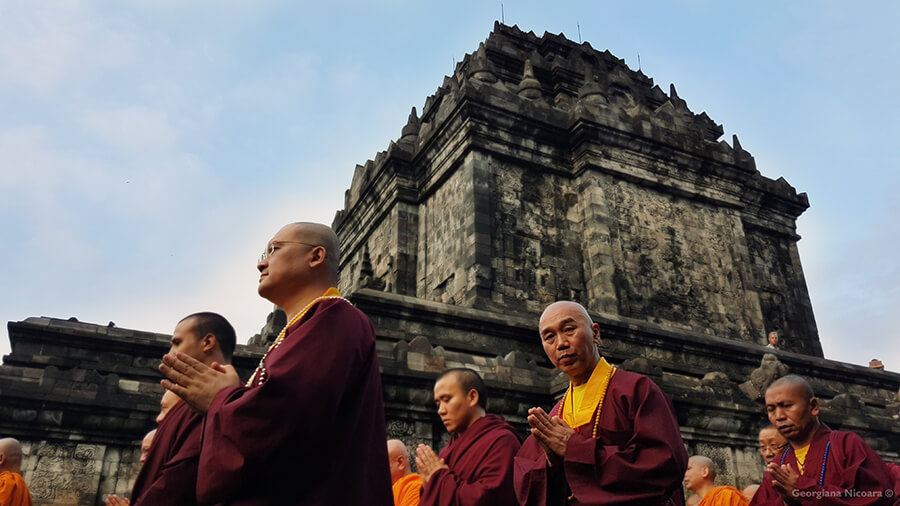
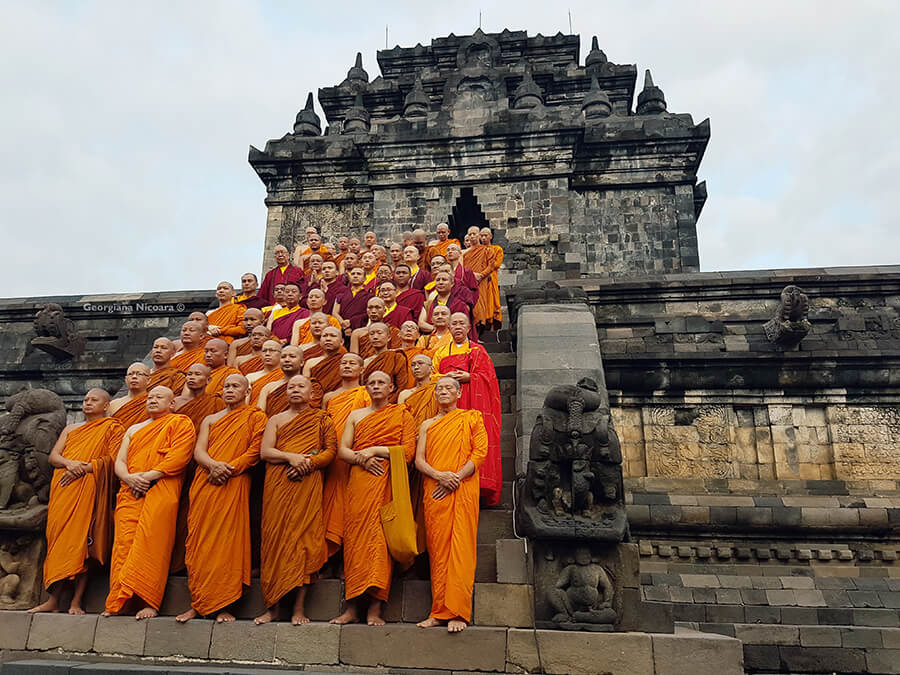
As this was the day before the big Waisak Festival, we participated in the preparation ceremony including the circumambulation around the temple and chanting inside the offering room.
We then went on to visit the Pawon temple in the middle of a little village.
Day 5: Waisak Festival
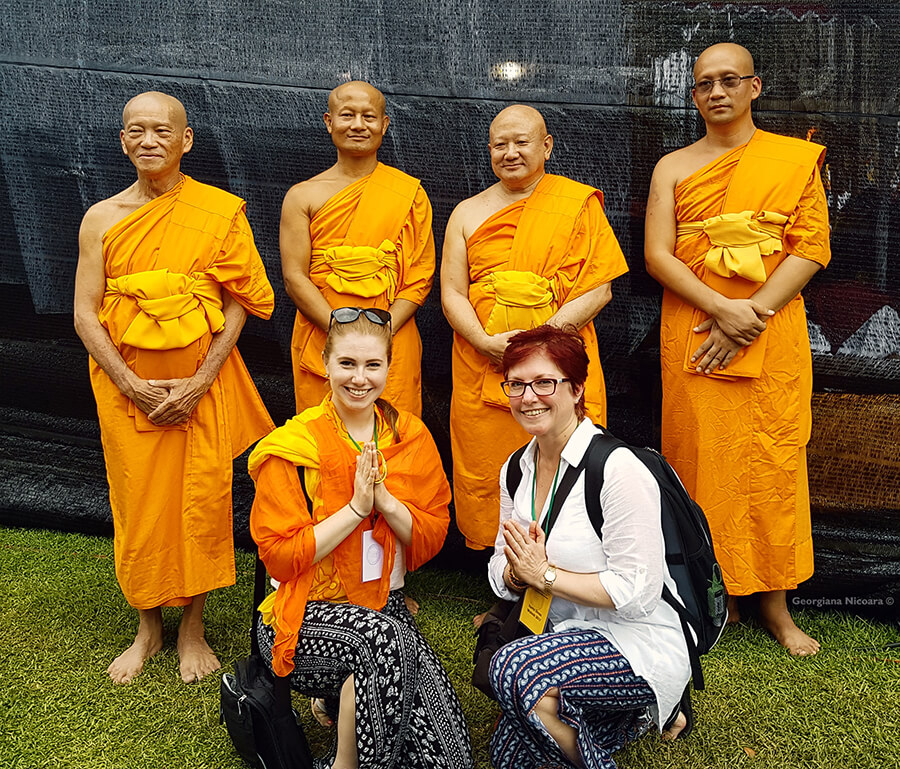
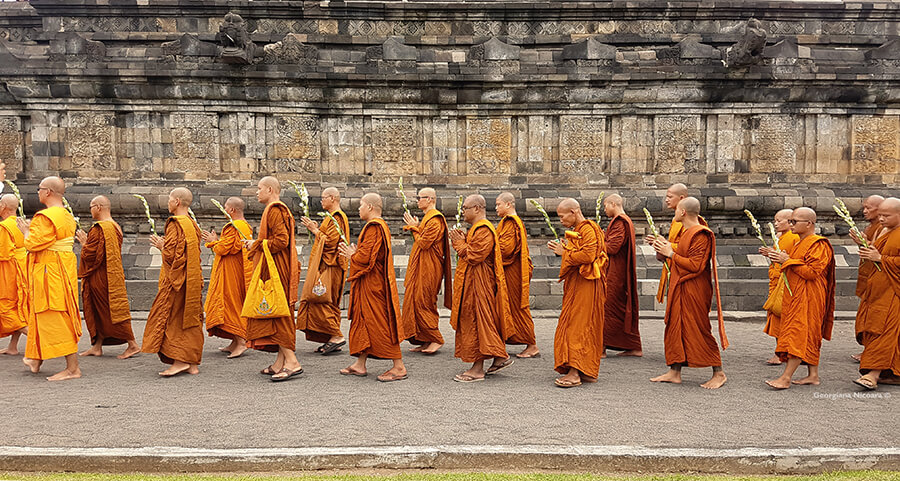
We arrived at Mendut at 1 PM to join the festival. It began with a series of chants and rituals. We then lined up with the monks to start the 3km procession from Mendut to Borobudur.
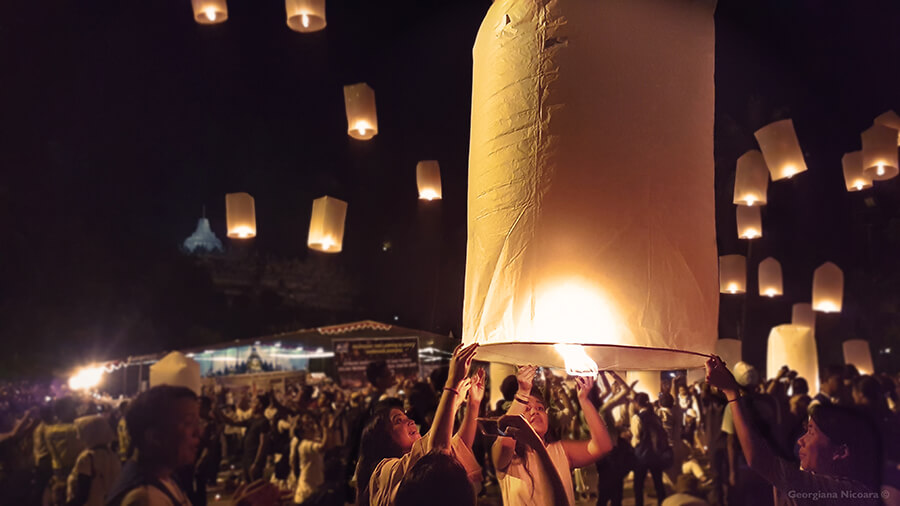
Once we arrived at Borobudur, we were picked up by Saiful, and taken to the Nurudin house for dinner then dropped off again at the temple for the lantern release for the ending of the Waisak Festival.
Day 6: Bicycle Tour
We went on a bicycle tour of the surrounding villages around Borobudur. This included a plantation, some pottery villages, and the bamboo forest.
Day 7: Kotagede, Imogiri, Dafam Hotel
This day we visited Kotagede, the Muslim compounds, saw the prayers, visited the bathing pools, and just experienced a usual day in the compound. We went on to visit Imogiri, the Javanese King’s burial grounds. To be able to enter, you must let them dress you in the traditional Javanese wear.
We also took part in a Javanese chant and meditation around the King’s grave and were able to enter in the intimate room where a lot of Javanese come to feel the spirit of the King and make wishes.
We left Borobudur and went on to the Hotel Yogyakarta Dafam. Saiful drove us here.
Day 8: Jomblang Cave***
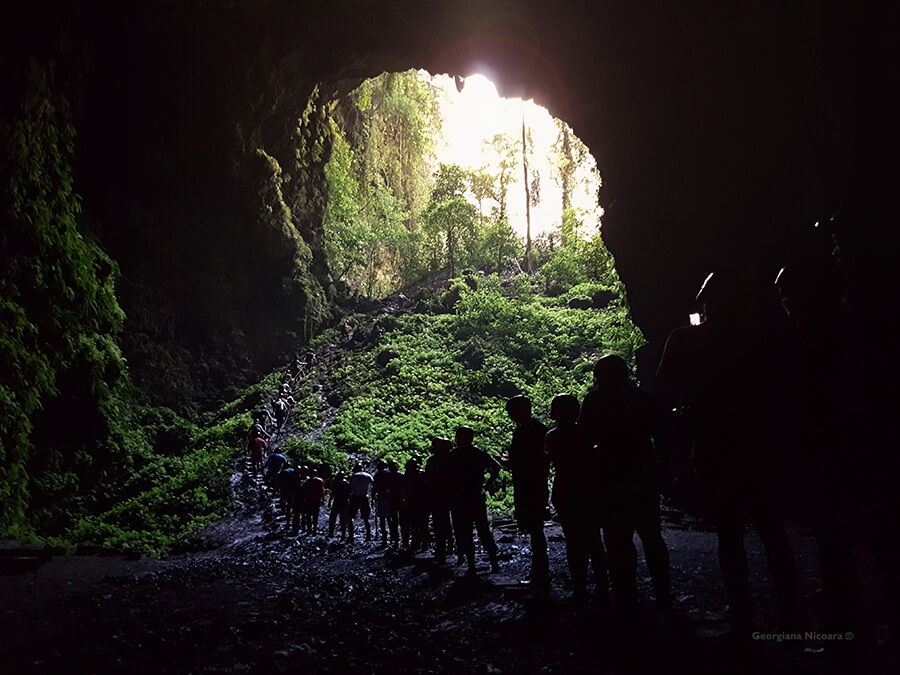
Another one of my favorites. We took a day trip to the Jomblang Cave. They give you rubber boots and rappel you down into the cave in groups of two. Their mechanisms for rappelling are very makeshift but seem to last through the years.
Once you get down, you go with a group of people underground towards another cave where you explore for about an hour. I recommend bringing an ash light as it is pitch black there and it becomes a hassle to rely on other for light. It is very muddy there so don’t wear any clothes that you can’t get dirty.
In the end, you walk back to the first cave, and then they bring you back up two by two. The wait is a bit long but worth it to get out.
Day 9:Malioboro Mall
Yay, shopping!! This was a day to relax, we walked to the mall and shopped around for a bit.
Day 10: Merapi Volcano
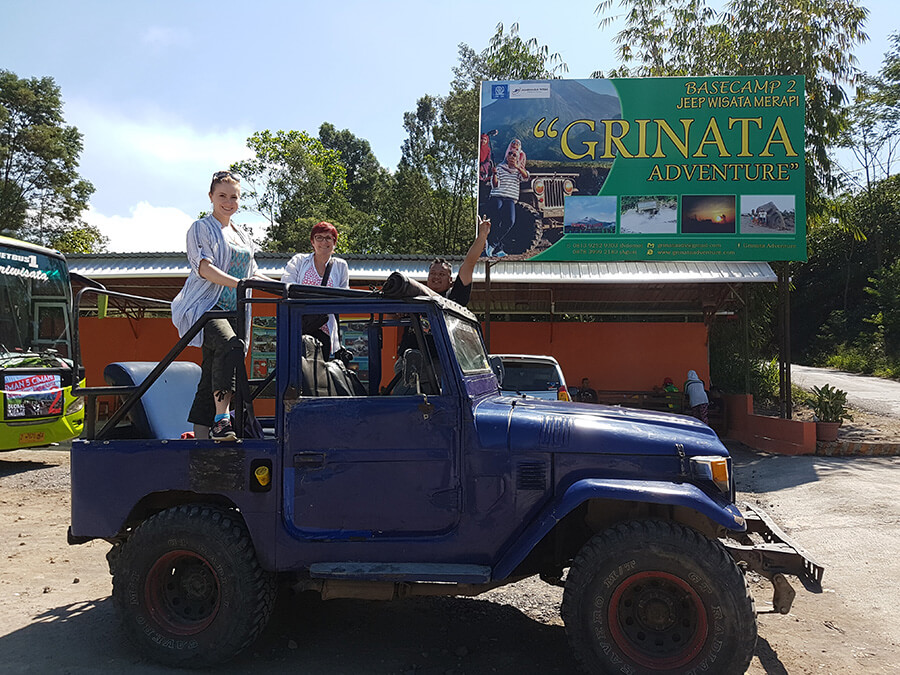
At the Merapi Volcano, we rented a Jeep and a driver to take us around the base of the volcano, and to the town which was overtaken by lava several years before.
We had stopped at a few sights along the way. It gets very windy, and dusty along the way and it is an extremely bumpy ride. Be warned! Very fun!
Day 11: Prambanan Temple, Sewu Temple, Plaosan Temples***
The Prambanan Temple is one of the only Hindu temples in Java, and it’s very well known. There are a series of different temples to be visited, and each has interior rooms for different gods.
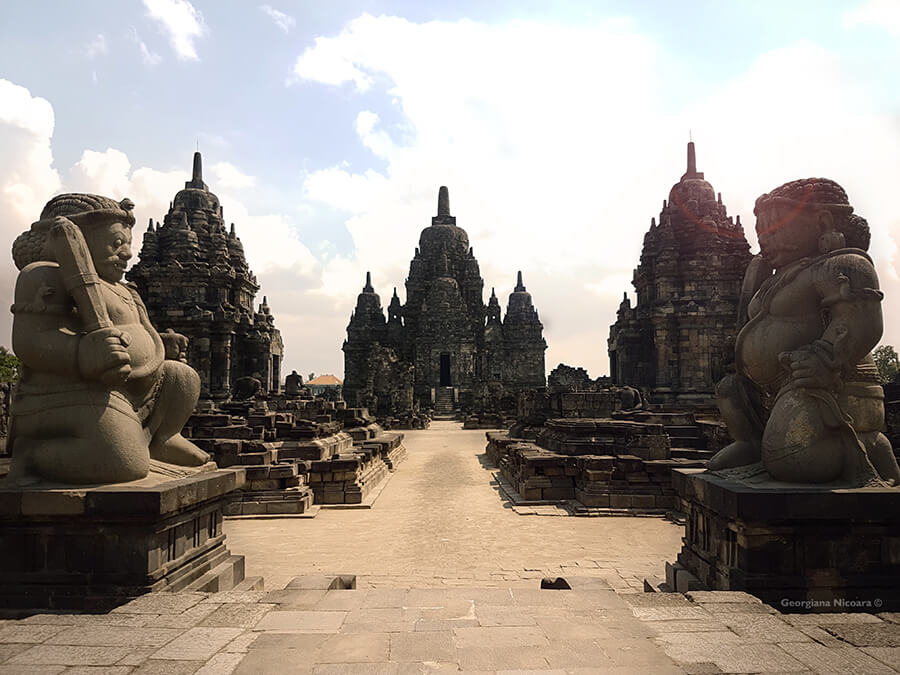
After the main grounds, we visited the Sewu Temple (see image below) in the Prambanan Grounds, the only Buddhist temple there. This was a very beautiful experience, and has a good energy about it.
We drove a bit further towards the Plaosan Twin Temples and continued to a restaurant overlooking a river, hidden away in a tourist village. Didn’t catch the name but all the guides bring their guests here after the Prambanan Tours.
Day 12-13 Malioboro Markets
These were two relaxing days checking out the Malioboro Markets, which is a great place to practice haggling.
Day 14: In Transit to Bali
This day, I departed with my mom as she went on her flight back home to Canada. I continued my journey towards Bali.
Day 15: *** Uluwatu Temple, Tanah Lot, GWK (Garuda Wisnu Kencana)
We took a trip to the temple on the water, Tanah Lot. Here you can walk around the temple grounds, which is a rocky beach. And you can receive a blessing with holy water and rice under the temple, though you cannot enter it.
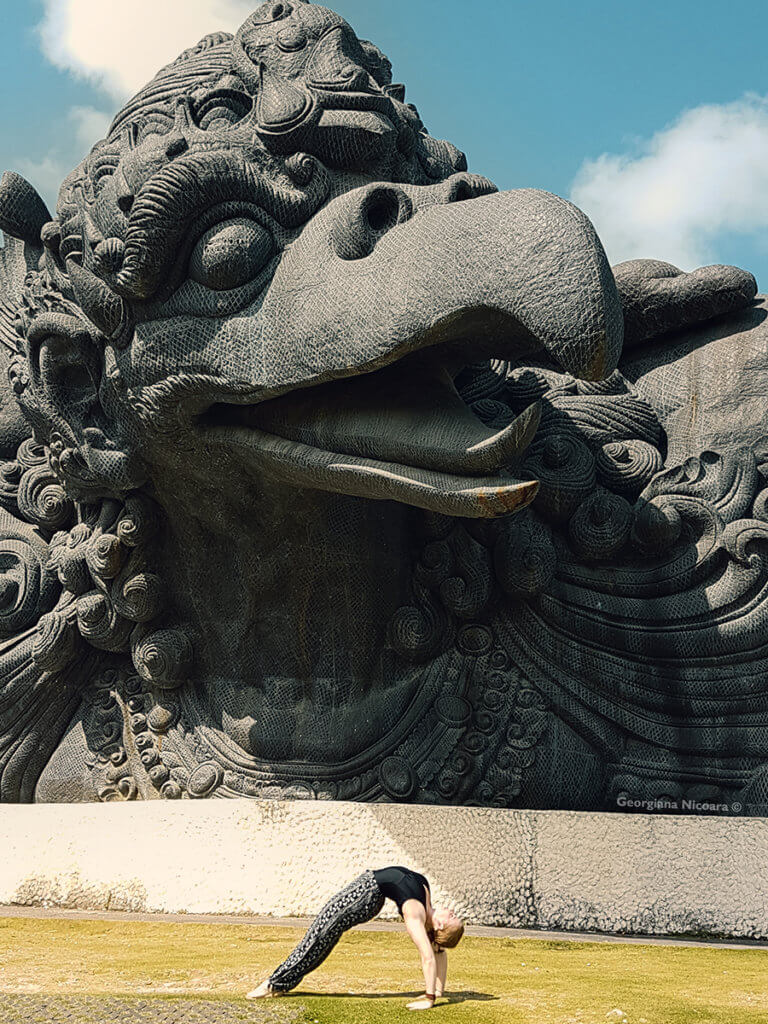
We continued to GWK (see image below), which is a park with oversized Balinese character sculptures. The entry fee is a lot higher than other places, 110 IDR ($7US) and doesn’t seem worth it to see 3 sculptures. But it is kinda cool to see.
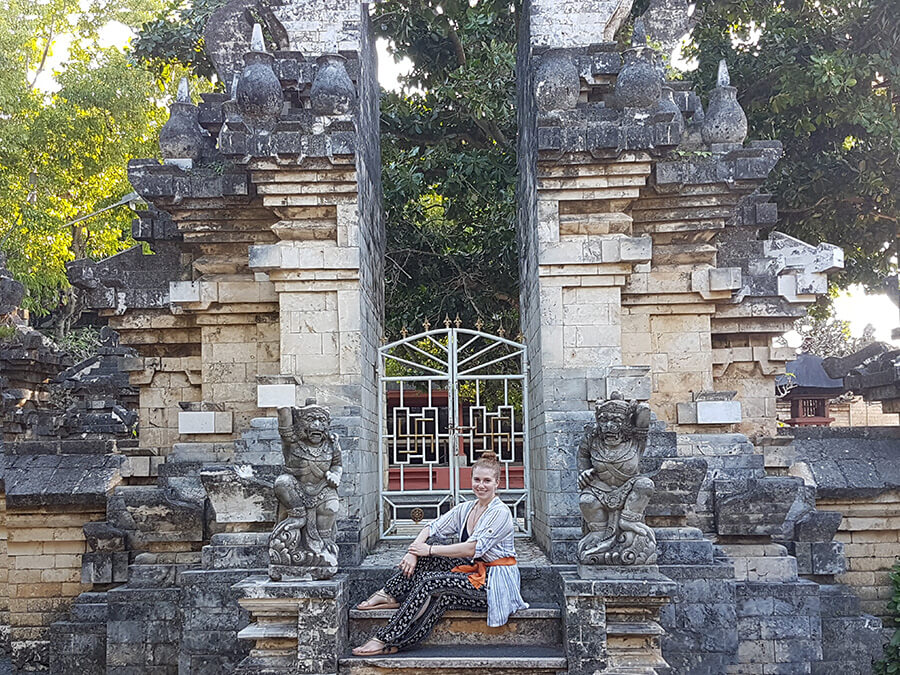
The last stop of the day was the Uluwatu Temple, which was another one of my favorites. This is also a temple on the cliff overlooking the water. Though you cannot access the temple, the views are spectacular.
The monkeys in this area tend to be aggressive so make sure to hide all small objects such as sunglasses and food.
Day 16: *** Nungnung Waterfall, Barong Dance, Mengwi Temple
We arrived to see the Barong Dance; it is a long dance narrative of the traditional Balinese story. We continued to the Mengwi Royal Family Temple, which I loved.
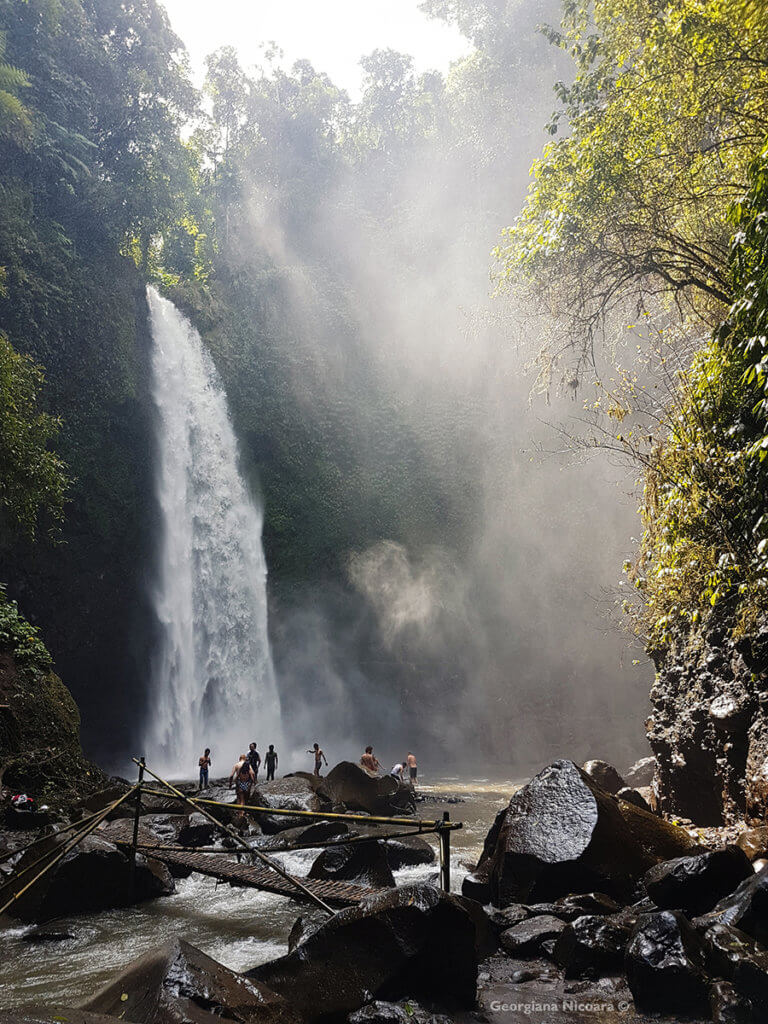
After driving quite a bit, we arrived at the Nungnung Waterfall. To arrive at the waterfall from the parking lot, there are several hundred steps down, but it is worth it.
You can bathe in the waterfall, with a beautiful view. The walk back up is exhausting.
Day 17: Transit To Gili Trawangan***
It was the time we transferred to Gili Trawangan, to the Eden Cottages. The transfer is by speedboat and costs 800IDR ($60US) per person for a return trip if booked through Nurudin.
It also includes transport from the hotel to the boat, and from the return boat to the hotel.
Day 18: Snorkeling, Reggae Bar***
We had a beautiful day snorkeling around the 3 Gili islands with our guide Jas Wadi (He can be contacted through Facebook for tours, though I do not remember where we booked this trip).
We started at Gili Trawangan, then Gili Meno, and finally Gili Air. These are three sister islands. We stopped on Gili Air for lunch overlooking the black sands.
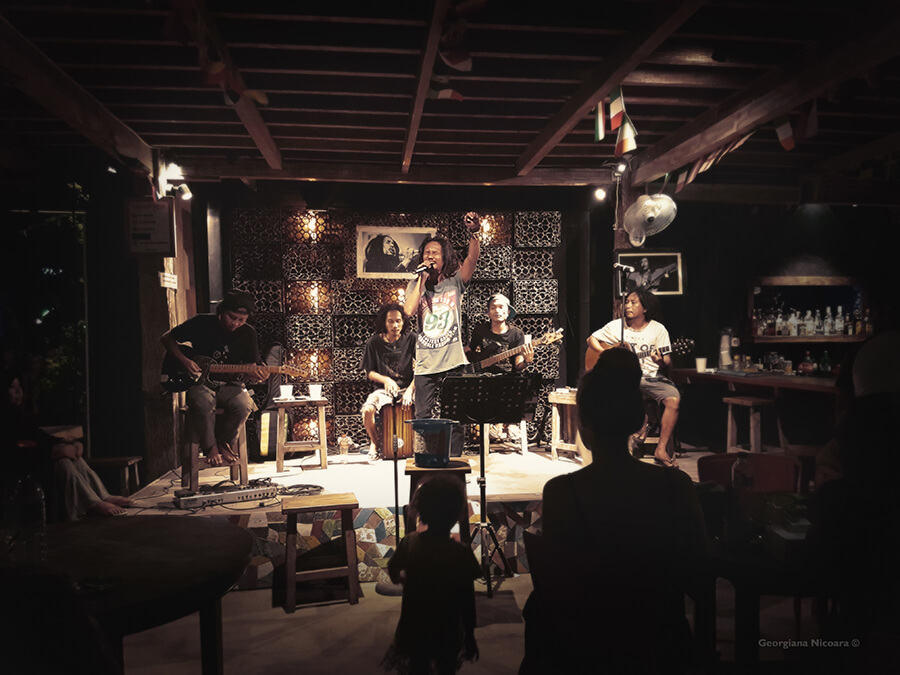
In the evening, we decided to explore the nightlife and it seemed like everyone was at the Sama-Sama Reggae Bar. Pleasant atmosphere and one of the most excellent and most entertaining reggae bands I’ve ever heard.
Day 19: Transfer To Ubud, Monkey Forest Markets
We transferred to our new hotel in Ubud, the Warji House 1. Then we took off an explored the markets of the Monkey Forest Road.
Though we did not explore the Monkey Forest itself, it is a recommended visit.
Day 20: Batur Volcano Hiking Trip, Ubid Shopping***
We had booked the Batur Volcano Hike ahead of time and highly recommend it. Our guide was Gede Ngarti and he made the hike doable and enjoyable.
Hiking up 6km of the volcano at 2 AM to watch the sunrise was one of the most dif cult things I’ve done, but it was worth it to feel on top of the world.
This tour is called the Bali Morning Trekking Tour and can be found here: http://balimorn- ingtrekkingtour.com/ There’s also quite a few monkeys you can play around with once you arrive at the top, and several areas of hot springs you can visit.
Included in the Batur trip, is a trip to a coffee plantation, where you can sample many types of coffee including the “poop coffee” called Luwak Coffee.
Day 21: *** Pura Tirtha Empul, Elephant Cave, Candi Tebing Gunung Kawi, Pengumuman
Here we began at the elephant cave, which was a cave with elephant sculptures and prayer rooms inside, and a series of small temple grounds surrounding it.
The next stop was at Candi Tebing Gungung Kawi which has a series of temples sculpted into gigantic walls of stone.
***We went on to Pura Tirtha Empul, the Water Temple. This was a personal favorite. Along with elaborate temple grounds, the main attraction is a long pool with spouts where people pray and bathe themselves in the holy water. They must start at one end, and pray towards each of the sculpted spouts. For this, they provide traditional Balinese outfits.
***Next, we stopped at a beautiful and relaxing restaurant overlooking the rice fields, called Boni Bali Restaurant. Highly recommended. We made a quick stop at the community temple called Pengumuman and walked around the temple grounds.
Day 22: Ubud Shops Visit
We took it easy this day, walked around and visited the shops in Ubud. Also went to Ibu Rai Restaurant for dinner. Highly recommended.
Day 23: Flight Back Home
Flew back to Edmonton, Alberta.
Overall Impressions
Java and Bali are very different places. Java feels more culturally appropriate to Indonesia; it is an excellent place to be to engage with the people and the traditions.
Meanwhile, Bali is a good place to go on vacation if you want to visit beautiful sites and sit on the beach, though they do seem more commercially focused. Ubud especially has very high-end shops and several streets that look more developed that the majority of the country.
For the vacation feel, I would recommend staying in Kuta or one of the Gili Islands.
The people are incredibly friendly, and you will feel the human connection here more than anywhere else. Though many people do not speak English, they try as best they can to communicate and make you feel welcome.
If you have any questions or need clarification on anything, don’t hesitate to contact me via Facebook or at [email protected].
The Best Places to Visit in Southeast Asia, Seen from A Different Perspective – Watch the Episode Below
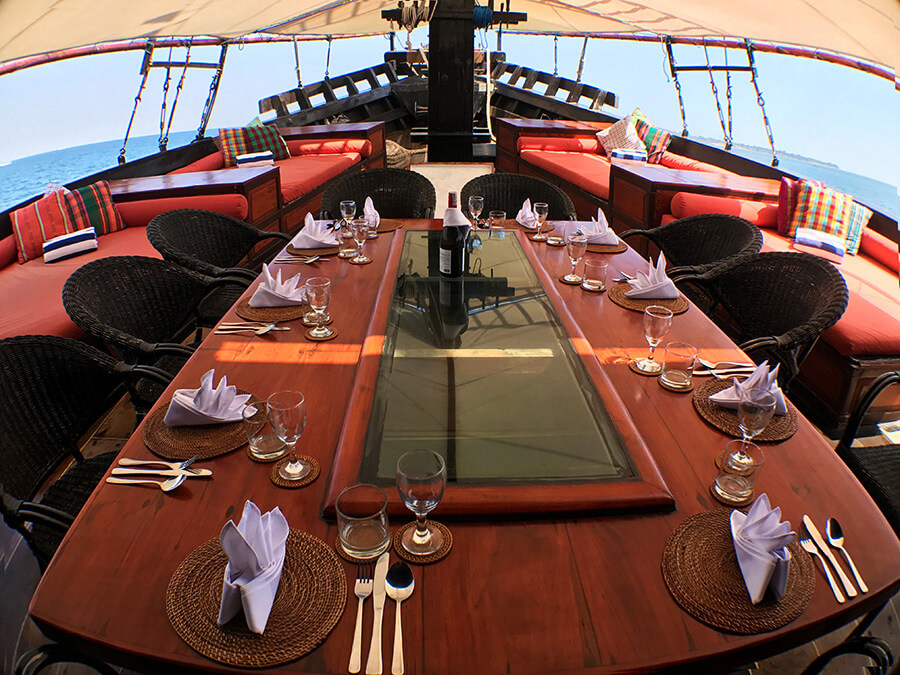
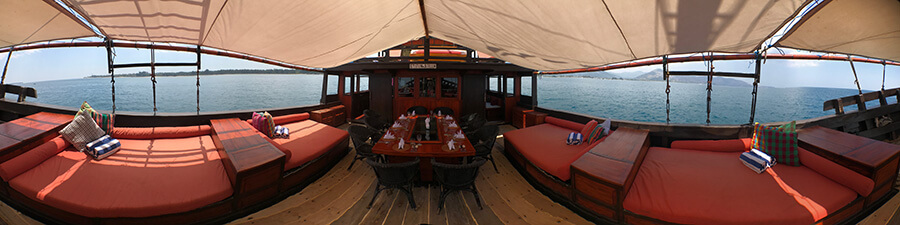
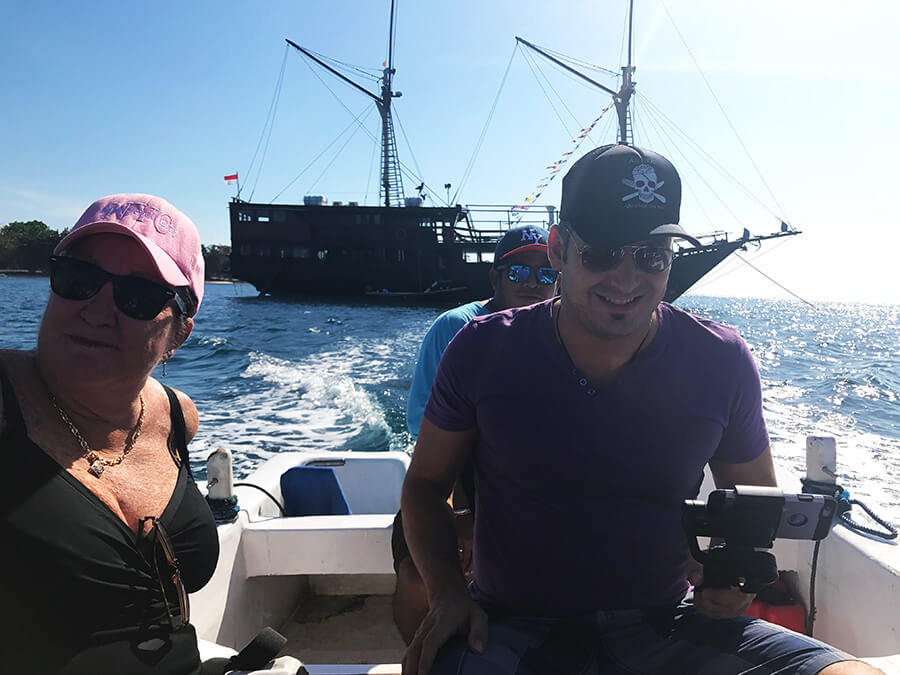
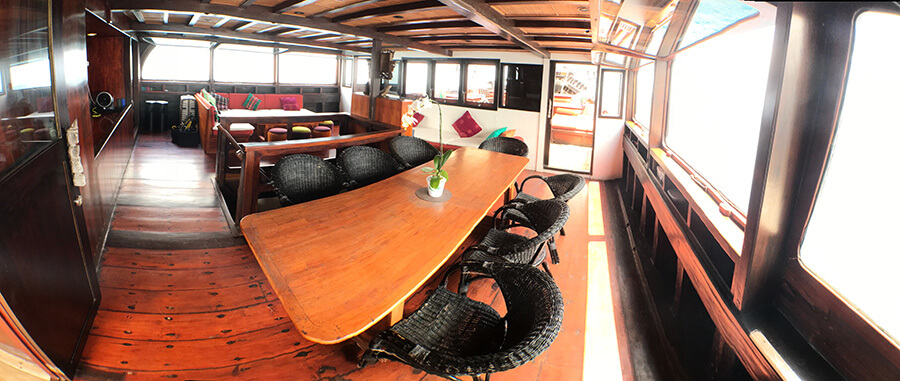
Have you ever been on a pirate ship? If you haven’t, there is an upscale one in Indonesia you should want to be on. I would even call it a “luxury” pirate ship, but hey, if it was too luxurious, it wouldn’t be a pirate ship anymore. Let me show you one of the coolest things to do in Indonesia.
I threw another dart at the world map while I was celebrating my birthday in Panama and the new randomly chosen destination was Indonesia. It ended up being one of the best trips I ever took. I am happy to share with you the tips, tricks, and adventures you can embark on if you visit that side of the world.
Watch the webisode above revealing the full “pirate ship experience” (I also throw a dart at the world map at the end of it) or you can keep reading for the amazing story:
As some of you know, I turned throwing darts at the world map into my lifestyle. While I was in Panama City, I decided to throw another dart. I hit the Indonesian waters, and the search began! From visiting temples in Lombok to the best things to do in Bali, I was all over the Internet.
Meanwhile, my friend Matt – who I am doing the Travel by Dart TV show with – just confessed that for his upcoming birthday he wants to wake up on a boat, somewhere in the middle of nowhere. I said the middle of nowhere is exactly where my dart hit, so we should experience it together.
Like the good friend I am, I contacted a bunch of sailing companies in Indonesia and asked if they could accommodate us. We were invited to spend four fabulous days on Al Iikai, which means “Queen of the Sea” in the local language.
And off we went. Only this time around, we decided to invite our good friends and business partners from India, Arindam, and Satinath to join us. They had never traveled outside their country, so this was interesting already.
Walking on Al Iikai: “I Felt My Legs Melting and Becoming Part of The Wood”
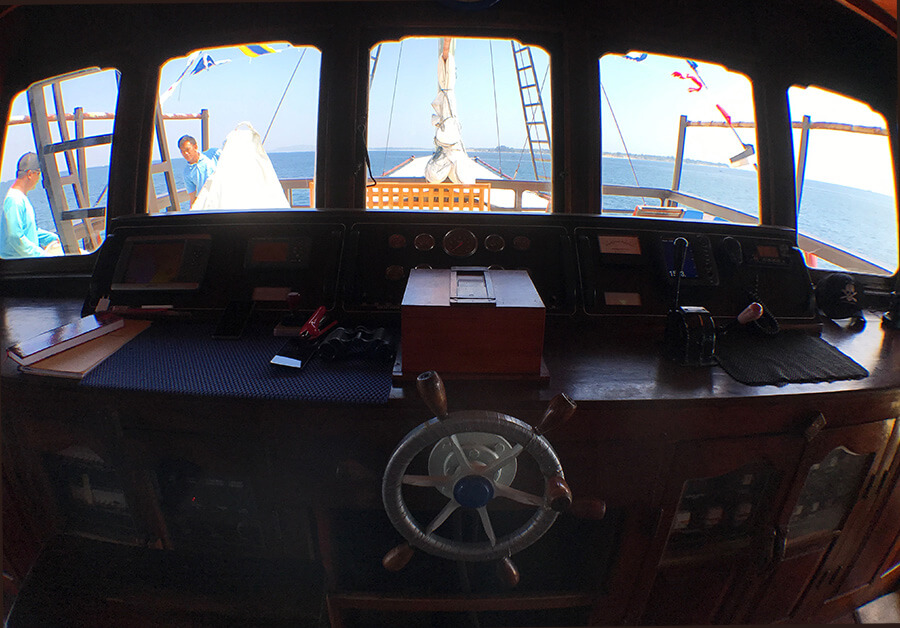
Al Iikai is like no ship you’ve ever been on before. Walking on it, you feel like you are in a movie, only to enjoy real-life moments that come your way at the right time.
Owner Amanda Zsebik, originally from Australia, bought Al Iikai four years ago when it was in a pretty bad shape. Why did she do that?
“My life was a bit of a mess. I went on a cruise in Vietnam and realized I really loved being at sea. I loved being in this part of the world, especially Indonesia. I went to Southern Sulawesi, then it happened. I started to have this dream three times a night. I heard voices saying the name of the boat: Al Iikai. I soon went to Bali and found it. It was love at first sight.”
“I am very intuitive. I like to feel what’s right. When I found Al Iikai, I was walking around, and I intuitively felt if it was right to buy it. I went to the back of the boat where the hydraulics steering cables were. I felt my legs melting and becoming part of the wood on the deck. I knew I was part of the boat and we were meant to be together. I bought it right there.”
Working with 5-star Hotels Housekeeping Executives
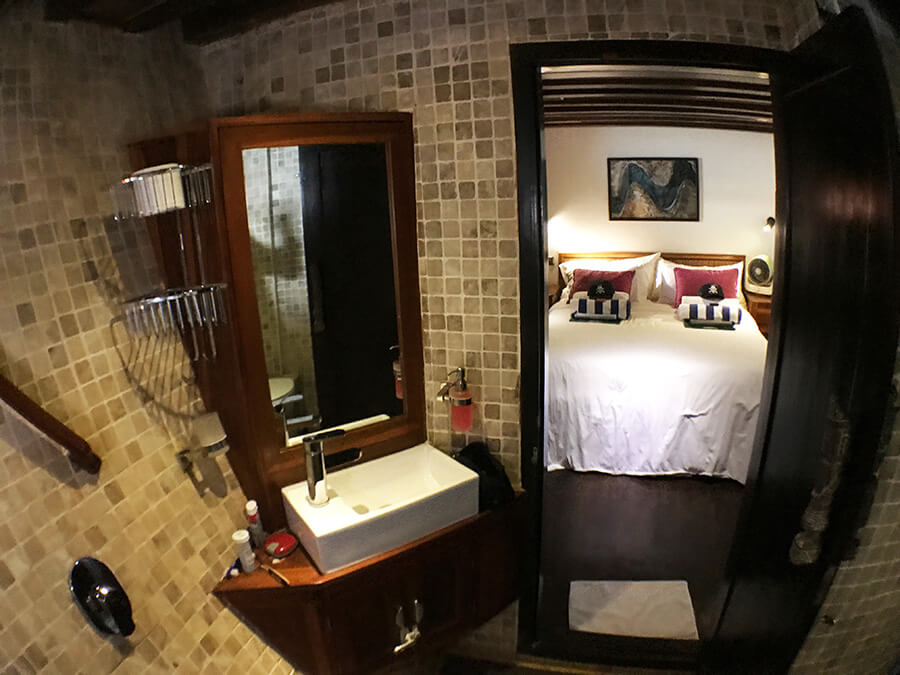
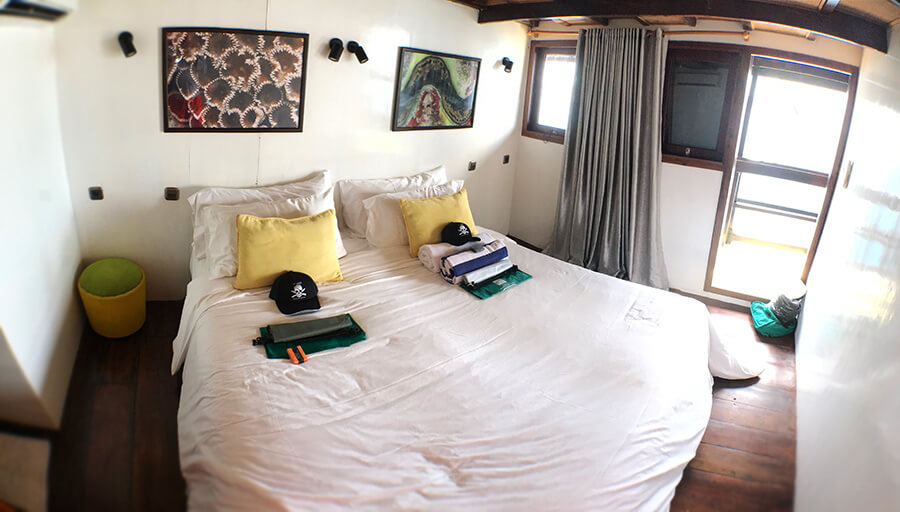
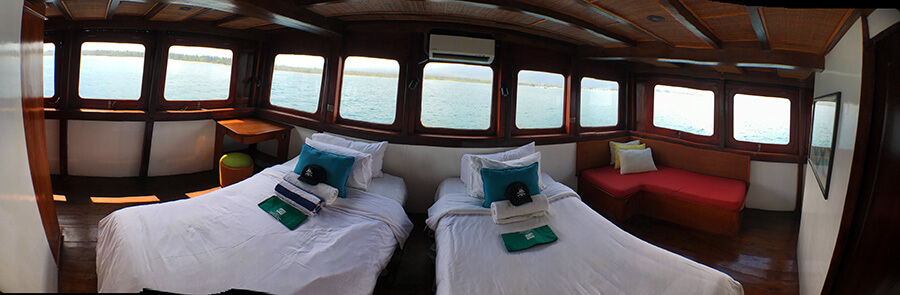
“I wanted Al Iikai to be like a floating hotel, not like a boat,” says Amanda, who spends more than nine months a year on the ship. “It is my home now.”
“When I bought it, Al Iikai had very small, very cheaply constructed bedrooms. I changed that. When I was renovating it, I worked with the head of housekeeping from a 5-star hotel in Bali. I did the linen, the pillows, and the mattresses with him. Then I used quality bathroom features for the best experience.”
“On the other hand, I kept a lot of its initial design just to stay true to its originality.”
Gourmet Chef, Quality Food
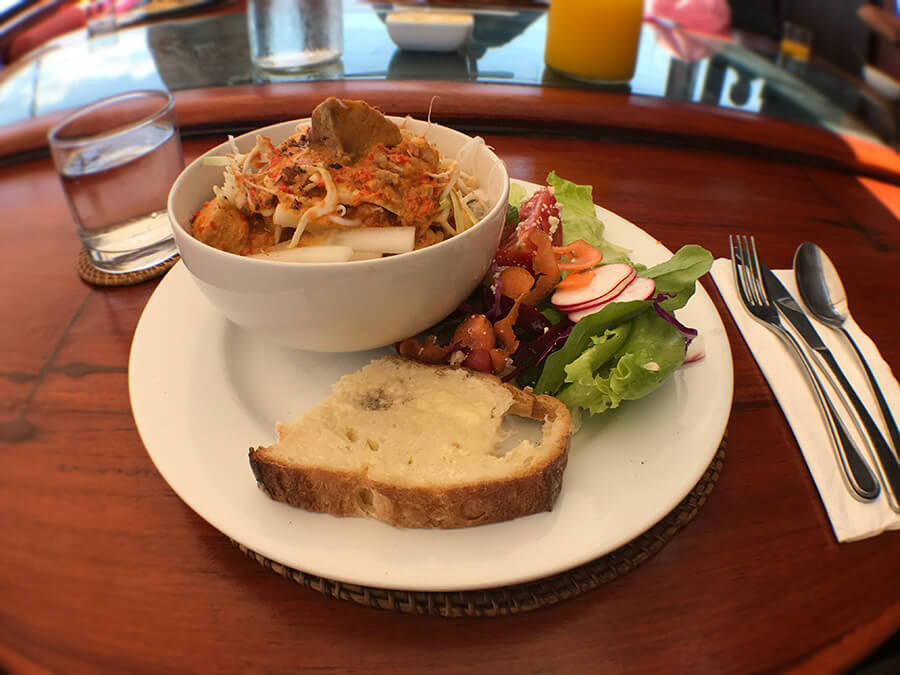
The chef working on Al Iikay, Suchi, is also a former employee of a 5-star hotel in Bali. Zsebik recruited her not only for her cooking skills. “Suchi is amazing. She is also very caring. She makes sure everyone on board is happy and healthy. She even takes care of the clients who are seasick.”
The rest of the people working on the boat have varied backgrounds. “The original crew is from Southwest Sulawesi. They were part of a group called The Boogers which was Sea Fearers. They were very feared as seamen, which is where we get the name Boogie Men from. I’ve had to mix that up with crews from different islands from Indonesia, so I don’t have one sub-ethnic group represented, but many,” says Zsebik.
Experiencing the Secret Islands of Indonesia and the Real Culture of Lombok
Are you going to Indonesia soon? I don’t know about you, but I love to immerse myself in local cultures.
Amanda promised to show us “the secret islands of Indonesia”, rather than going to the touristy Gili Trawangan.
We landed in Denpasar and walked on the boat in the evening. We sailed away and spent the night just off Gili Asahan, a small island close to Labuhanpon, Lombok.
In the morning, we took one of the speedboats we had on board and went to the “mainland” (improper saying, since Indonesia consists of 17,508 islands). By mainland, I meant the bigger island of Lombok.
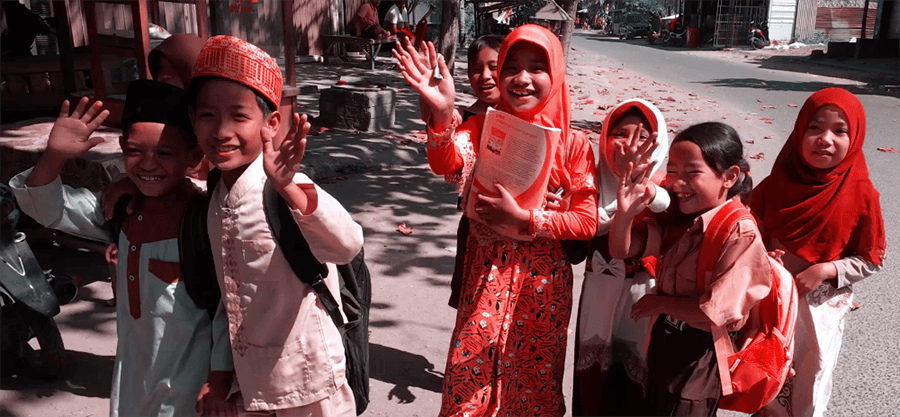
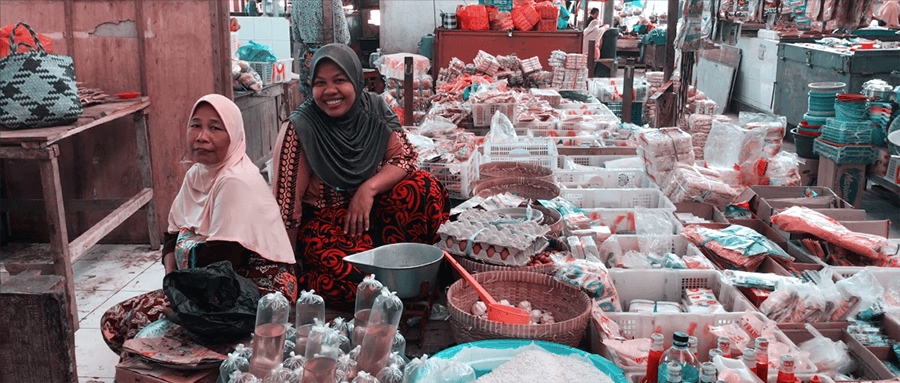
Amanda and her team took us to a village with no tourist soul on it. We went to the local street market in the back of a pick-up truck, for a couple of reasons: to experience the real culture of Lombok, as well as to buy local non-GMO ingredients for Suchi to use for making our lunches.
The street market was full of over 500 merchants selling everything and anything. We got what we needed, looked around, connected with some locals, and moved on.
Yoga Retreat: Lombok Has It All
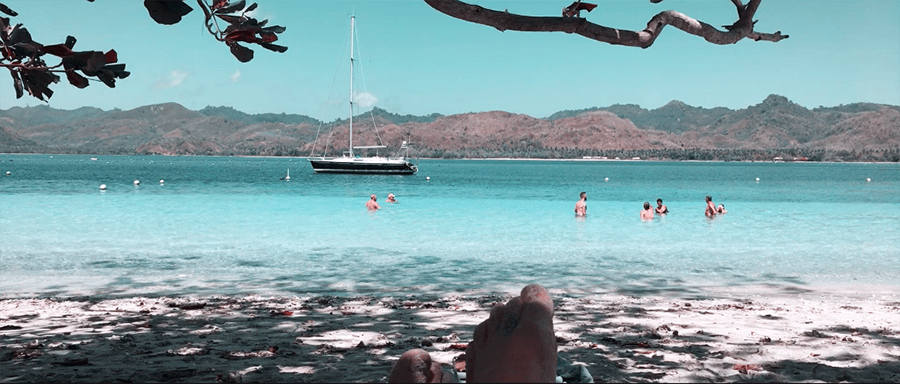
Since we were close to Gili Asahan (“Gili” means island) Amanda took us there as well, so we could dive in the crystal-clear water of the ocean.
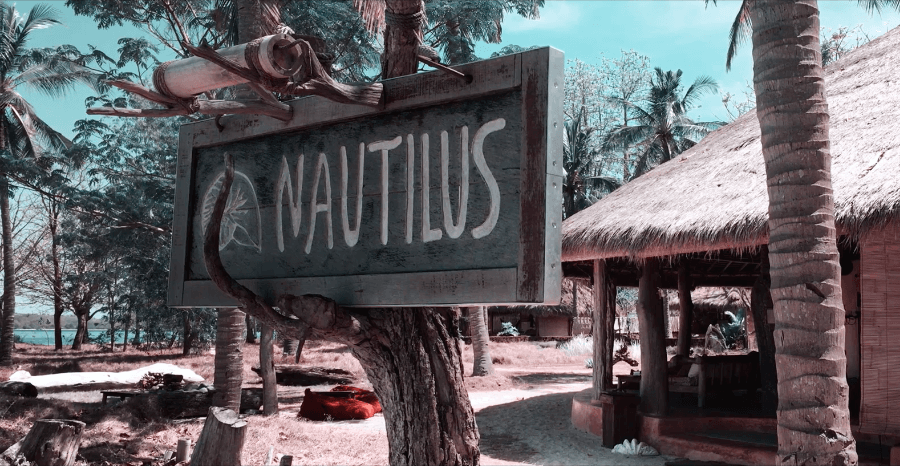
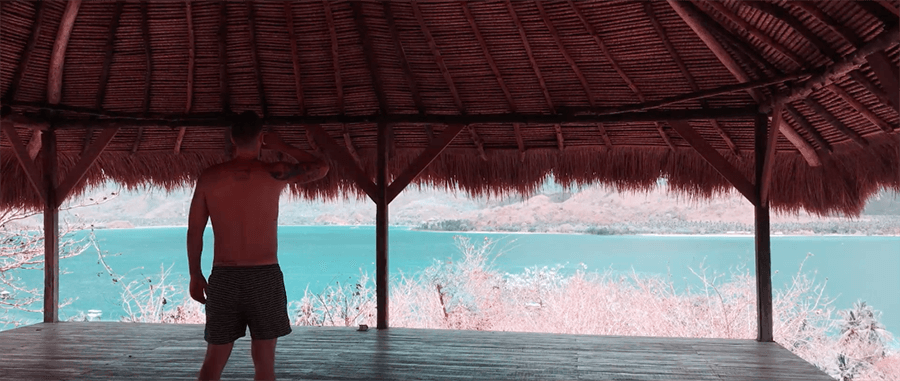
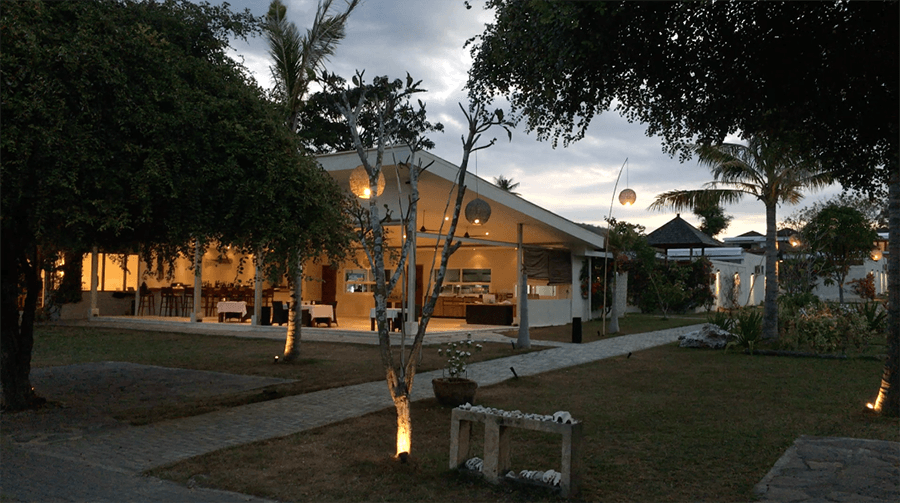
The island has a couple of fantastic resorts and establishments such as Nautilus, but also a yoga retreat located on top of the mountain. Magical, inspiring, empowering. Close to the clouds. Just like you see in advertisements and commercials. It is called Yoga Shala and is located right by a resort named Nautilus.
We got on the island around noon, so it was boiling. Unfortunately, nobody would do yoga at that time, when there is a million degrees outside (despite the “hot yoga” reference). The instructors come in the evenings and get tourists to do it while watching the sunset.
However, if you go to the Indonesian islands, especially to Bali, you will find yoga retreats everywhere, so don’t bother searching the Internet before your visit.
We went back to Al Iikay, did a bunch of jumps in the ocean from the top of the boat and got ready for something special arranged by Amanda.
Massage with Traditional Sasak Healer in Lombok
Next stop of the day was on Gili Gede, another tiny island just off Lombok. That’s where we enjoyed a fantastic massage from two local Sasak healers. Mine was called Futiana. Sasak people are the inhabitants of Lombok.
Then we visited a close-by resort called Ko-ko-mo, where we had some drinks while Alex (Amanda’s daughter) and Brad (Amanda’s best friend) enjoyed a nearby pool.
We went back at night and slept on Al Iikai’s deck. It was a phenomenal feeling, while the boat was sailing away in the middle of the Indonesian oceans.
Best Snorkeling in Indonesia and Swimming with Turtles
The second morning was dedicated to snorkeling. It was also Matt’s birthday, so the day was fully packed with things to do. Not to mention that he had his wish fulfilled, waking up on his birthday on a boat in the middle of nowhere aka Gili Rengit, in this case.
Snorkeling. What an experience. We woke up very early, around 7AM. That’s early to me. Amanda came on the deck and became the human alarm. “Let’s go see some giant turtles, lazy as-es,” she said. You can tell we had a bond already established.
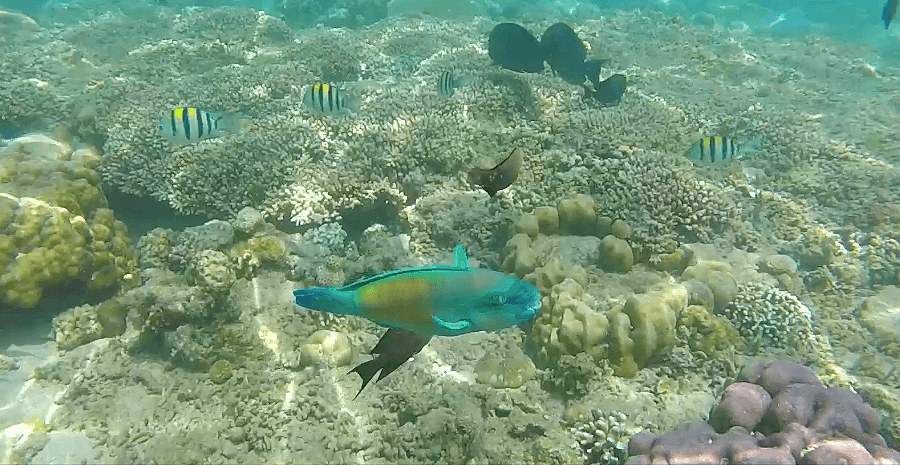
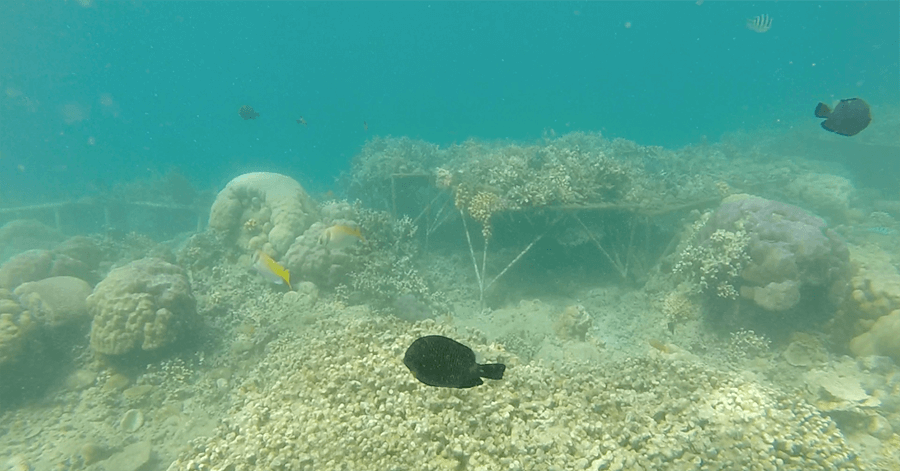
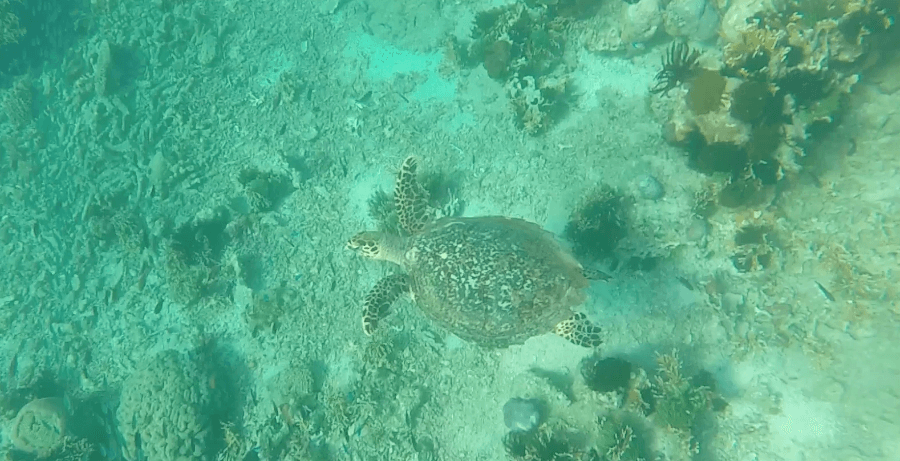
We did two snorkeling sessions that morning, one by Gili Rengit and the other one by Gili Layar. We saw three turtles and a bunch of amazing other creatures in a very short time.
In the afternoon, we went to one of the most amazing snorkeling locations in the world: Gili Nanggu. The video in the beginning of this article tells more about the experience you can have if you ever go there.
We also took Satinath and Arin with us, who missed the morning session. While we were busy capturing videos with GoPros and waterproof pouches for our smartphones, Sat lost his mobile. This made all of us stayed an extra hour at the bottom of the ocean hunting for the pouch holding his iPhone. However, that was without success.
In the evening, we celebrated Matt’s birthday with the whole crew singing “Happy birthday” in both English and the local dialect, which was great to hear. They came out “playing” kitchen utensils while singing, from aluminum pans to empty water kegs. Sounds were dissipating in the sky with a slight echo effect, which was kind of weird since we were in the middle of the ocean. The mystery of the Indonesian islands.
Crazy Storm at Midnight
As we all went to bed, Captain Soke was supposed to take us to Gili Bidil overnight. In Gili Bidil, we had planned a bunch of amazing things, like surfing and kayaking.
However, just a bit after midnight, a crazy storm caught us by surprise, after more than four days of sailing. Amanda woke up and ordered Soke to turn Al Iikai back, for safety.
We had to reshuffle our arrangements for the next day since we woke up in a different location, but that’s what a memorable experience is all about. I loved every second of it.
One of the Best Things to Do in Lombok: Escape to The Lady Diana’s Waterfall
One other thing – the weather changed our plans to visit Gili Moyo, for a famous natural beauty existing there. Moyo is located to the East of Lombok and is the home of “Lady Diana’s waterfall”. The late British Princess used to come here in the early 90’s to hide from paparazzi and meditate.
The waterfall is a well-protected wonder as it’s part of a natural park, a reserve. I wished we’d had more time to spend on Al Iikai.
Gili Trawangan, Gili Meno, and Gili Air – The Most Visited Islands in Indonesia
After the all-night storm, we anchored by Gili Air, which we had the chance to see the next day.
We hit up the island in a wolf pack: Matt, Sat, Arin, Brad, and myself. Boys night out. No, not really. It was more like boys’ day out. We went around the village, had some drinks with the locals and other tourists and watched a boxing fight.
Gili Air is one of the three ‘Gilis’ that are the most visited islands in Indonesia, along with Gili Trawangan and Gili Meno. If you’ve been to Bali, you probably ended up on one of them. If you didn’t, and you’re about to go there, here is what you should know:
Motorized traffic doesn’t exist on any of the three. The methods of transportation available are the cidomos (horse carts, which are awesome to experience) or bicycles, up for rent.
Gili Air: Excellent Scuba Diving
Gili Air is the second smallest of the three islands and the closest to Lombok, making it popular with honeymoon couples and travelers seeking a quiet retreat.
It has a population of about 1,800. The island offers amazing snorkeling and scuba diving off its east coast, and turtles can be seen along the coral reef.
Gili Meno: Turtle Sanctuary Host
Gili Meno is the middle one of the three islands. Gili Meno has a population of about 500, mainly concentrated on the centre of the island. The main income comes from tourism, coconut plantation, and fishing.
According to Wikipedia, on the west side of the island, there is a small shallow lake that produces salt in the dry season. Until a few years ago there was also a small production of seaweed on the reef at the north end of the island. Gili Meno has swimming beaches all around the island, and a turtle sanctuary.
The island is the quietest and smallest of the islands. However, honeymooners are also often drawn to the crystal-clear water and idyllic, secluded white beaches.
Gili Trawangan: The Party Island
Gili Trawangan is the largest of the three islands and the only one to rise significantly (30 meters) above sea level. It measures 3 km long and 2 km wide, with a population of 1500.
The name Trawangan originates from the Indonesian word Terowongan (“tunnel”) due to the presence of a cave tunnel built there during the Japanese occupation in World War II.
Of the Gilis, Trawangan is the most developed and geared towards tourism. A local pub, Tîr na Nôg claims Trawangan is the smallest island in the world with an Irish pub.
After we left Al Iikai, we stayed another week on Gili Trawangan. (Subscribe to my newsletter to receive the article about that!) Now let’s get back to the Queen of the Sea.
Golfing in Lombok
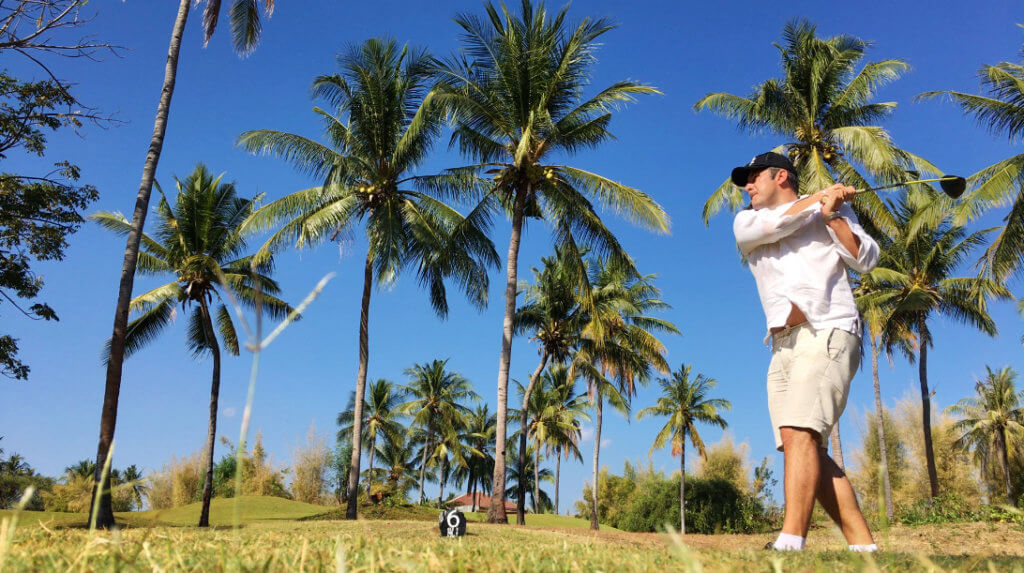
The fourth and last day on Al Iikai I spent with Amanda, playing golf. Me, someone who has played golf five times in my life. For some reason, this time around was great and I really enjoyed it.
Amanda took me on the mainland Lombok, to a golf course called Sire Beach Golf Club, formerly known as Kosaido. We played 9 holes, and she kicked my ass, but for some reason, I felt like a rockstar. Weird, I know.
I loved the fact that the staff was very friendly, managers came over to say hi, and some of the people working there even asked to take pictures with us.
The prices are somehow similar – or not! – to the ones at North American golf courses. As a tourist, you pay 1.5 million IDR Indonesian Rupiahs (about $110US) for the fee, while the club’s rental costs 300,000 IDR ($22US). The golf shoes cost you about $10US.
I Threw Another Dart at The World Map
From the golf course, we returned to the ship and prepared to say our farewells to the amazing crew we spent four days with.
Matt and I were moving to Gili Trawangan while Sat and Arin were returning to India.
However, as I usually throw a dart at the map in every new location I visit, I decided to do it on Al Iikai, too. The crew was excited to see me choosing a new destination so randomly. I brought out my rotating map and the dart, and I did it on the rocking boat!
You’ll be surprised to see what happened.
If you haven’t watched the whole video yet (at the beginning of this article) well… you should.
On the other hand, if you want to connect with Amanda and her team at Al Iikai, feel free to send an email to: [email protected] or call: +62 812 4610 4019.
Travel With Me and Check Off Your Bucket List Items
That was it, folks. Meanwhile, you can travel with me to my next adventures. I am going to the following destinations within the next 12 months, so why don’t you join me while we’re being followed by a camera – click on the links if you’re interested:
To every single country of the ones mentioned above, I will go with an exclusive group of only 10 people (selected applicants only). I call it The Spark Experience. It’s for those people who work hard enough and rarely treat themselves, is for those who don’t want to have regrets, is for those who want to do something they’ve never done before. Is that you?
Feel free to let me know if you want to join at the bottom of every page listed above. Cheers!
I just threw a new dart at the world map and I am happy to travel to my new destination in just a few days! Watch the video below to see the dart throw (there is a little contest in there too)!
Just finished the Indonesia trip and episode!!! This country is truly amazing.
You can read the article and watch the episode HERE.
I was born in Romania, where you can discover some of the best castles in the world. However, while I grew up there, I thought fortresses, castles and monasteries were something extremely common, which you could find anywhere in the world. After traveling to more than 50 countries up to date, I was proven wrong. Not only I didn’t find many – except in Wales, Scotland, Germany, Spain and a few other regions – but I discovered that Romania, if traveled from East to West and North to South, offers phenomenal sceneries rarely seen in the world. It should be on your Top 5 countries to see before you die (make sure you do it with the Spark Experience, a once-in-a-lifetime adventure consisting of 10 selected applicants – you could enter your name HERE).
I decided to put together a list with the most beautiful castles, fortresses and monasteries around Romania. Without a doubt, I am sure I am also missing a lot of them, so feel free to suggest for addition to this article. Without further do, here is a list with amazing locations:
1. Bran Castle aka Dracula’s Castle in Transylvania (Castelul Bran)
See more pictures like this by following me on Instagram HERE.
Bran Castle (Romanian: Castelul Bran) is one of the most famous castles in the world. It is situated near Bran, a town located in Brasov County, right at the border between Transylvania and Wallachia. It is commonly known as Count Dracula’s castle. The first documented mentioning of Bran Castle is the act issued by Louis I of Hungary on 19 November 1377. A few months ago, a Canadian brother and sister spent a night at Dracula’s Castle, sleeping in coffins as beds, after winning a competition. Siblings became the first people to pass the night there in 70 years. Watch the video below to see the two siblings spending the night in coffins at Bran Castle:
One of the cool things is that you could join a fabulous tour of Dracula’s Castle by being part of the Spark Experience, which I mentioned above. It will take you to Transylvania for something that’s more than a vacation. Enter your name for the amazing trip HERE.
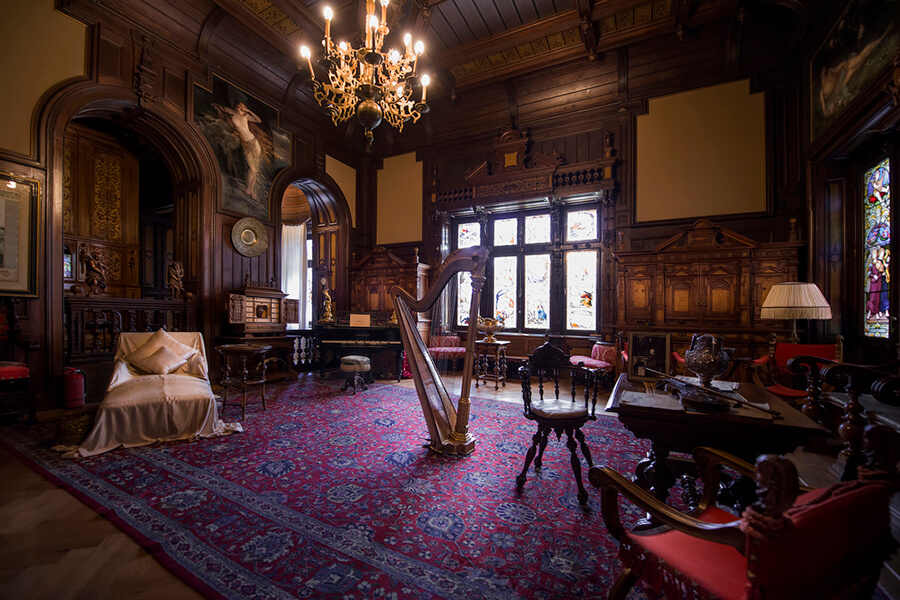
2. Peles Castle, Inaugurated in 1883 (Castelul Peles)
Peles Castle (Romanian: Castelul Peleș) was built between 1873 and 1914 and is located near Sinaia, a town in Prahova County. It was constructed for King Carol I and had its inauguration in 1883. More details here. Below there is an image from the interior.
3. Corvin, One Of the Best Castles To Visit in Europe (Castelul Corvinilor)
This Gothic-Renaissance castle (pronounced Castelul Corvinilor in Romanian) is one of the largest castles in Europe. It was built in 1446 as a fortress, but also contained jail cells. More details here. The main image of this article also features the Corvin Castle and was taken by Florin Ihora. Watch the video below to see a complete tour of the Corvin Castle: Corvin Castle Complete Video Tour
4. Voronet Monastery, The Sixtine Chapel Of The East (Manastirea Voronet)
The Voroneț Monastery (Romanian: Manastirea Voronet) is a medieval monastery in the village of Voroneț, now a part of the town Gura Humorului. It is one of the famous painted monasteries from southern Bukovina (more below), in Suceava County. The monastery was constructed by Stefan Cel Mare (Stephen the Great) in 1488. It is also known as the Sixtine Chapel of the East.
5. Putna Monastery, Where Stephen the Great Is Buried (Manastirea Putna)
Putna Monastery (Romanian: Manastirea Putna) houses the tombs of Stefan cel Mare (Stephen the Great, one of the most important voivodes in the Romanian history) and several of his family members. It is a place of pilgrimage very popular these days. Located also in Suceava County.
6. Cantacuzino Castle, finished in 1911 (Castelul Cantacuzino)
The construction of the castle started at the request of Prince George Grigore Cantacuzino and was finalized in 1911. It is built in Neo-Romanian style. The total surface of the estate is over 3,000 square meters. Nowadays is a museum, just like all the other castles. Located in Prahova County and it is one of the other best castles to visit in Europe.
7. Crisan, aka the Cow Monastery (Manastirea Crisan)
This monastery is one of the oldest monasteries in Romania, built in 1450. It is located in the village of Crisan, Ribita town, in the Hundeoara County. The Crisan Monastery is also known as Manastirea Vaca (Cow), after the name of an adjacent village called Vaca. Photo by Irinel Carlanaru.
8. Rasnov Citadel, A Medieval Fortress (Cetatea Rasnov)
The citadel was built between 1211-1225 as part of a defence system for the Transylvanian villages exposed to outside invasions. It is located in the city of Rasnov, Brasov County.
9. Sucevita, One Of The Most Famous Painted Monasteries in Bukovina (Manastirea Sucevita)
Located in the village of Radauti, Suceava County, this church contains both Byzantine and Gothic elements, and some elements typical to other painted monasteries of northern Moldavia. Both interior and exterior walls are covered by mural paintings and depict biblical episodes from the Old and New Testament. Built in 1585.
10. Viscri Fortified Church (Biserica Viscri)
This fortified church in located in the Viscri village, Brasov County, Transylvania. It is a UNESCO World Heritage site. It is a Lutheran church built by the German Transylvanian Saxon community. One of the oldest of its kind, built between 1141 and 1162.
11. Sturdza Castle, The Gothic Beauty (Castelul Sturza)
Located in Miclauseni, Iasi County. It is a Gothic-style palace built between 1880-1904 by George Sturdza. The castle had many valuable collections of books (over 60,000 pieces) and documents of the time, paintings, jewelry, medieval costumes, weapons, etc. Most of them were burnt by Russian soldiers.
12. Karolyi Castle, A 15th Century Piece That Looks As New (Castelul Karolyi)
Located in Carei, Satu Mare County. The castle is named after an old noble family, the Károlyi family. Their first known residence here dates back to the end of the 15th century. It survived over the medieval era to several attacks from the Ottomans and other barbarians. It is considered as one of the best castles to visit in Europe as well.
13. Fagaras Fortress, House Of Princes (Cetatea Fagaras)
Built in 1310 on the site of a former wooden fortress, Fagaras (Brasov County) was enlarged between the 15th-17th centuries. It was considered one of the strongest fortifications in Transylvania. It also functioned as a residence for various princes and their families, such as Gabriel Bethlen (1613-1629) and Georg Rákóczi (1630-1649).
14. The Black Church, Heart Of Brasov (Biserica Neagra)
The famous Black Church (Romanian: Biserica Neagra) rests in downtown Brasov, one of the largest Romanian cities (also a very touristy spot). It was built by the German community and stands as the main Gothic style monument in the country. The structure was partially destroyed during a fire set by invading Habsburg forces on April 21, 1689. Afterwards, it became known as the Black Church. Here is a great quick video about the Black Church in Brasov:
15. Rupea Citadel, Another Medieval Fortress (Cetatea Rupea)
Rupea Citadel (Romanian: Cetatea Rupea) is one of the oldest archaeological sites in Romania, the first signs of human settlements dating from the Paleolithic and early Neolithic. The first documentary attestation dates from 1324 when the Saxons revolted against King Charles I of Hungary took refuge inside the citadel. Located also in Brasov County.
16. Curtea de Arges Monastery: The Legend Of A Human Body Paved In The Walls (Manastirea Curtea de Arges)
The legend says that this church was ordered by Radu Negru to be built by Architect Manole. With Manole being unable to finish the walls, the prince threatened him and his helpers with death. At last Manole suggested that they should follow the ancient custom of placing a living woman into the foundations; and that she who first appeared on the following morning should be the victim. The other workers warned their families, and Manole was forced to sacrifice his own wife, called Ana. Thus the cathedral was built. When Manole and his assistants told Negru that they could always build an even greater monastery, he had them stranded on the roof so that they could not build something to match it. They fashioned wooden wings and tried to fly off the roof, but, one by one, they all fell to the ground and died. A spring of clear water, named after Manole, is said to mark the spot where he fell.
17. Iulia Hasdeu Castle, Honouring A 19-Year-Old Deceased Daughter (Castelul Iulia Hasdeu)
The Iulia Hasdeu Castle is a house built in the form of castle by historian and politician Bogdan Petriceicu Hasdeu in the city of Câmpina, Prahova County. Work on it began in 1893, after Hasdeu’s daughter, Iulia, died at the age of 19. The construction was finished in 1896.
Timisoara Orthodox Cathedral (Romanian: Catedrala Metropolitana Timisoara) was raised between 1936 and 1941.The building’s style is Neo-Moldavian style, late Renaissance, Ottoman, and Byzantine architecture elements. Photo by Adrian Benea.
20. Alba Carolina Fortress, The Largest Citadel In Romania (Cetatea Alba)
The Alba Carolina Fortress (Romanian: Cetatea Alba) encloses between its walls several centuries old attractions laden with history, including Saint Michael’s Cathedral. Cetatea Alba is located in the city of Alba Iulia, Alba County, and is the largest citadel in Romania.
Barsana is one of the wooden churches in Maramures County, a beautiful synthesis of Eastern and Western European architecture, with Gothic and Byzantine elements. It was built in 1720. It is also a UNESCO World Heritage Site.
22. Neamt Citadel, A Medieval Fortress Built in the 14th Century (Cetatea Neamtului)
Neamt Citadel (Romanian: Cetatea Neamtului) is a medieval fortress located in north-eastern part of Romania, near Târgu Neamț, Neamț County. It was built in 14th century Moldavia during Petru I of Moldavia’s reign and expanded in the 15th century. The citadel played a key role in Stephen III of Moldavia’s defense system.
23. Ramet Monastery, Erected in 1214 (Manastirea Ramet)
One of the oldest monasteries in Transylvania, Ramet stands out through its shape and boldness. It was built in 1214 and is located in Alba County.
24. Ghika Palace, Baroque Style (Palatul Ghica)
Ghika Palace is situated in Comanesti, Bacau County,was built in the last decade of the nineteenth century by Dimitrie N. Ghica, under the guidance of architect Albert Galleron, in baroque style.
24. Cetatea Greavilor, An Abandoned Fortress
Cetatea Greavilor is located in Garbova, Alba County. It was built under Hungarian and German influence in the second half of the 13th century. In English, “greav” means earl, so the translation would be the Earls’ Fortress.
25. Mraconia Monastery, A Place Well Hidden (Manastirea Mraconia)
The church is located on the Danube River’s shore, in the Mededinti County, close to the border with Serbia. The place is called Cazanele Dunarii (“Danube’s Boilers”). The monastery was constructed in the late 1400’s, the exact date differing from one historian to another. “Mraconia” apparently means a place being hidden. The church is also known that during the Russian – Austro – Turkish battle (1787-1792) when it was almost destroyed.
26. Bethlen Haller: Once Castle, Now A Wine Symbol
The Bethlen – Haller Castle is situated in Cetatea de Balta, Alba County. Built between 1570 and 1580, the castle was completely redone between 1615 and 1624 by count Stefan Bethlen who based his construction on the example of Chambord castle in France. It was built in the French Gothic style, on four levels, and its purpose was recreational. It is now owned by Necşulescu family, owners of Jidvei, one of the largest Romanian winemakers. Needless to say, nowadays it is the host of many wine tastings and events related to the industry.
27. Dragomirna, Between Monastery and Fortress (Manastirea Dragomirna)
The Dragomirna Monastery was built during the first three decades of the 17th century, 15 km from Suceava, in Mitocu Dragomirnei village. It is the tallest medieval monastery in northern Moldavia.
28. Pestera Ialomitei Monastery, The Most Visited Church in Bucegi Mountains
This church is located in Moroeni, Dambovita County. It is situated in a unique place, right into the Bucegi Mountains, which makes it the most visited monastery in the area. The legend says that at times the walls of the cave turn into mysterious girls that are holding hands and dance like the wind around the church.
29. Deva Fortress, Overlooking The City (Cetatea Deva)
The fortress is located atop a volcano in the Poiana Ruscă Mountain Range within the Western Carpathian Mountains of Romania. From the foot of the hill, the city of Deva, Hunedoara County, spreads out. Deva Fortress was built in the 13th century.
30. Carta Monastery aka the Cistercian Church (Manastirea Carta)
Located in Carta, Sibiu County, this church is a former Cistercian (Benedictine) monastery in the Ţara Făgăraşului region in southern Transylvania. It is currently a Lutheran Evangelical church belonging to the local Saxon community.
31. Kendeffy Castle, Now A Hotel (Castelul Kendeffy)
Kendeffy Castle is located in Sântămăria Orlea, Hunedoara County. It was built in 1782 by the Kendeffy Family, a noble family at the time. The castle was nationalized by the Communist Party in 1982, and in 1982 went to the Hunedoara County Administration, which turned it into a hotel.
32. Chindia Tower, House Of Vlad The Impaler (Turnul Chindiei)
Chindia Tower (Romanian: Turnul Chindiei) is located in Targoviste, Dambovita County. It is the palace where Vlad Tepes (Vlad The Impaler) used to live. Built in the 15th century.
33. The Calendar Castle, aka the Ugron Palace (Castelul Ugron)
This castle is located in Zau de Campie town, Mures County, in 1911 by a baron called Istvan Ugron who was in love with a Russian princess. It was supposed to be an engagement gift, but the princess never came. The Castle is also known as the ‘Calendar Castle’ as was built based on the principles of a calendar. It has 365 windows as many days a year has, four towers as the number of the seasons, and 52 rooms as are weeks, 7 terraces as there are days in a week and 12 suites as are the months of the year.
34. Corbii de Piatra Monastery
Corbii de Piatra is a unique monastic rupestral cave, located in Arges County, close to Corbi village, 33 kilometers away from Curtea de Arges. The first official attestation was on June 23, 1512. The settlement, carved into a massive yellow sandstone wall that used to be a hermits’ shelter, still keeps on its limestone walls one of the oldest paintings in Romania. Experts say the mural paintings are executed in the purest Byzantine tradition.
Prejmer Peasant Fortress (Romanian: Cetatea Taraneasca Prejmer) protects the fortified monastery inside. It’s been one of the best kept fortresses in the world, being in perfect shape. It was built in 1211 by the Teutonic Knights in a Gothic style.
36. Red Castle From Heiemus (Castelul Rosu)
Built between 1864-1866 in vicinity of Bacau, the Red Castle (Romanian: Castelul Rosu) is not in use.
37. Moldovita Monastery From Bukovina (Manastirea Moldovita)
Another beauty from Bukovina, one of the painted monasteries. It is situated inVatra Moldoviței, Suceava County. The Monastery of Moldovița was built in 1532 by Petru Rareș, who was Stephen III of Moldavia’s illegitimate son.
The Prislop Monastery is a place of pilgrimage for the Christian Orthodox believers from all over Romania. Most of them wish to pay respects to the grave of priest Arsenie Boca. It is said that arguably after visiting Boca’s grave miracles happen for the pilgrims.
39. Ponor Monastery, The Athos Mountain of Romania (Manastirea Ponor)
Situated at 1,300 meters above the sea level, in Alba County, the Ponor Monastery (Romanian: Manastirea Ponor) is considered the Athos Mountain of Romania. Only men are allowed to visit.
40. Bucea Church, Green Fairy (Biserica Bucea)
The Bucea wood church is located on Gorban Hill, Cluj County, and was built in 1791 by the first seven Orthodox families in the village (now with 705 inhabitants). The event is also engraved on a beam from the entrance to the church. The church, composed of the narthex, nave and altar, is made of oak wood.
41. Cozia Monastery, Hosting Mircea The Elder’s Grave (Manastirea Cozia)
Cozia Monastery, built close to Călimănești – Valcea County today – by Mircea Cel Batran (Mircea the Elder) in 1388 and housing his tomb, is one of the most valuable monuments of national medieval art and architecture in Romania.
42. Feldioara Citadel, A Fortress Built By Teutonic Knights (Cetatea Feldioara)
Feldioara Citadel, located 21 km North of Brasov, it is also known as the Teutonic fortress and is the oldest fortification in Barsa Land. It was officially attested in 1225. It was founded by the Teutonic knights between 1211 and 1225 and transformed into a peasant citadel later on in 1457.
43. Lainici Monastery
The Lainici Monastery (Romanian: Biserica Lainici) is located 32 km away from targu Jiu, Gorj County. First mention of this monastery was in 14th century. The monastery was constructed during the reign of John Voivode between 1812 and 1817.
44. Namaiesti Monastery, Host Of A Miracle Virgin Mary Icon (Manastirea Namaiesti)
Some people claim Nămăeştii Church is the oldest convent in Romania. It is located in Campulung, Arges County. The monastery is a cave that houses an icon of the Virgin Mary that allegedly makes miracles (attributed to Luke tradition, framed in silver in 1798 and lithographed in 1871 by Major Papazogeu).
45. Saint Nicholas Church in Tulcea (Biserica Sf. Nicolae)
It was built in 1862 in Byzantine style. The Cathedral has countless valuable items inside, many of them covered in silver. This is it folks, thank you for taking the time to read my article. Feel free to drop a comment or subscribe to my newsletter here to be the first to get future articles. I am on my way to Indonesia – my last dart throw took me there, watch it here – so rest assured I will share some good information from that amazing as well.

![Travel by Dart: Indonesia – Here’s an Upscale Pirate Ship You Want to Be On [EP. 4]](https://dev.sorin.tv/wp-content/uploads/2017/12/pirate-ship-indonesia-al-iikai-2.jpg)



![Dart Throw #5: In Classy Panama [VIDEO]](https://dev.sorin.tv/wp-content/uploads/2017/08/travel-inspiration-throw-a-dart-at-the-map-and-go.jpg)


![45 Castles, Fortresses and Monasteries That Will Take Your Breath Away In Romania [WITH PICS]](https://dev.sorin.tv/wp-content/uploads/2017/08/Castelul-Corvinilor-Hunedoara-Romania-iancu-castle-900x675.jpg)
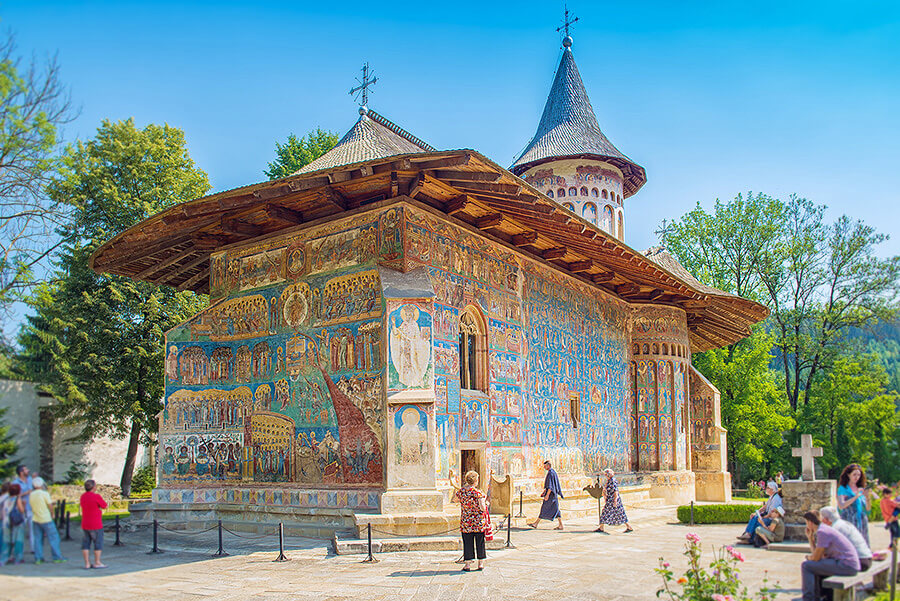 The Voroneț Monastery (Romanian:
 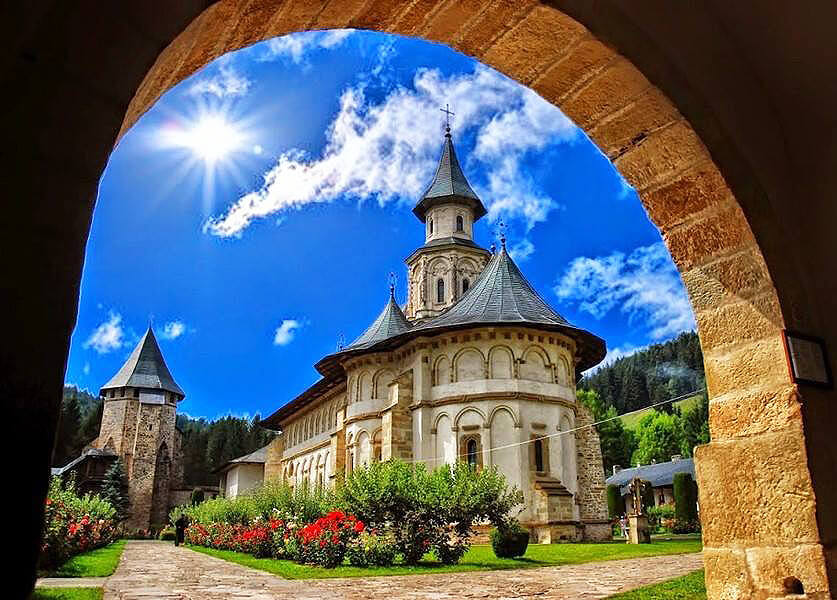 Putna Monastery (Romanian: Manastirea Putna) houses the tombs of Stefan cel Mare (Stephen the Great, one of the most important
 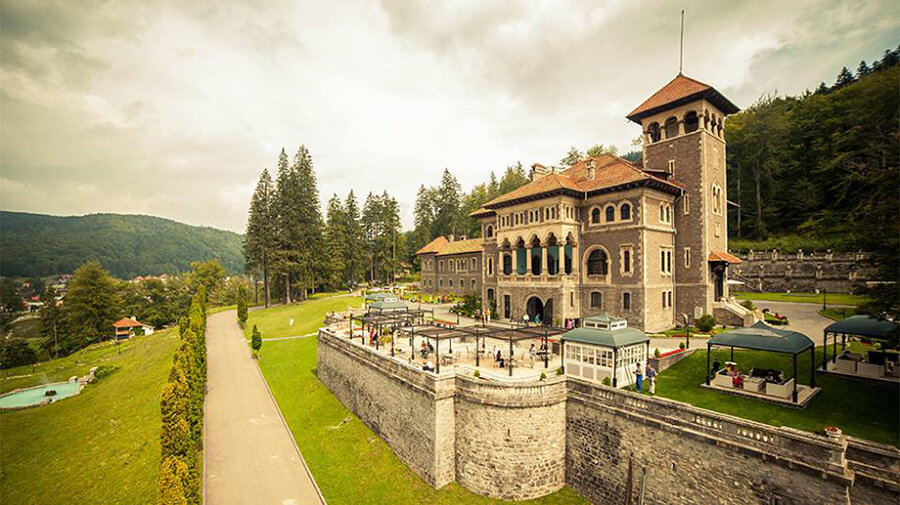 The construction of the castle started at the request of Prince George Grigore Cantacuzino and was finalized in 1911. It is built in Neo-Romanian style. The total surface of the estate is over 3,000 square meters. Nowadays is a museum, just like all the other castles. Located in Prahova County and it is one of the other best castles to visit in Europe.
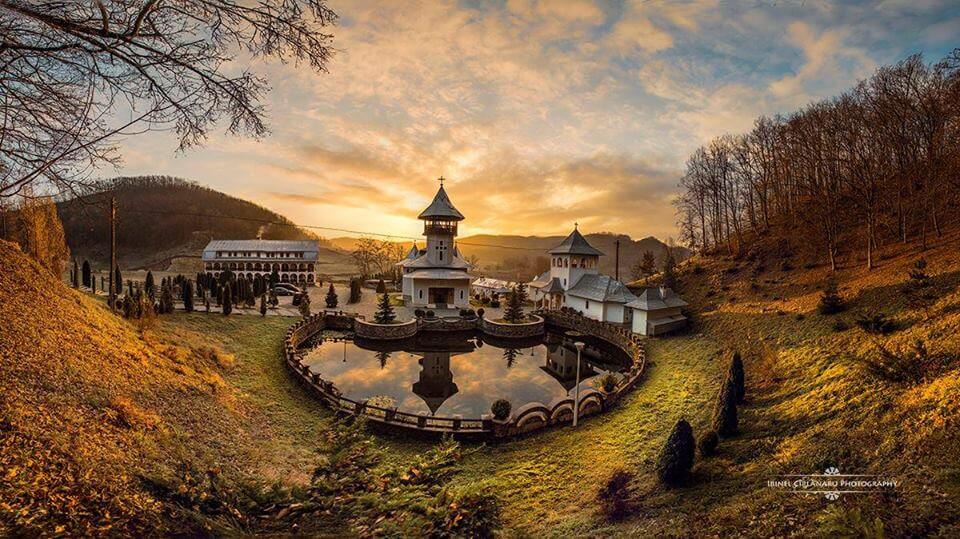 This monastery is one of the oldest monasteries in Romania, built in 1450. It is located in the village of Crisan, Ribita town, in the Hundeoara County. The Crisan Monastery is also known as Manastirea Vaca (Cow), after the name of an adjacent village called Vaca. Photo by Irinel Carlanaru.
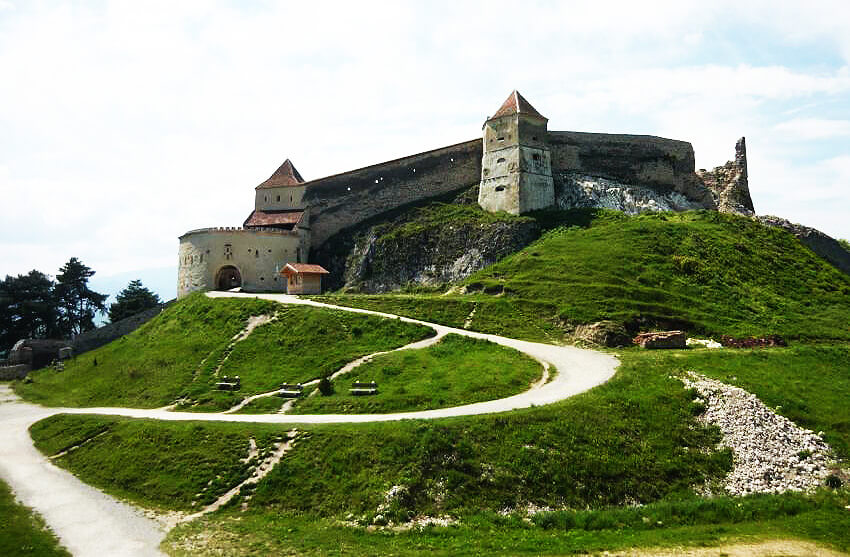 The citadel was built between 1211-1225 as part of a defence system for the Transylvanian villages exposed to outside invasions. It is located in the city of Rasnov, Brasov County.
 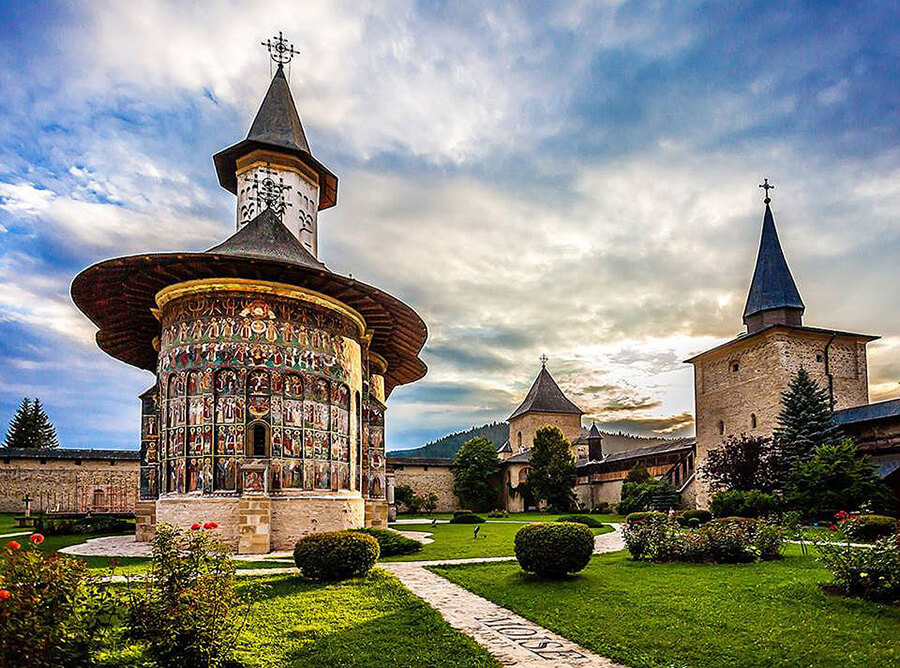 Located in the village of Radauti, Suceava County, this church contains both Byzantine and Gothic elements, and some elements typical to other painted monasteries of northern Moldavia. Both interior and exterior walls are covered by mural paintings and depict biblical episodes from the Old and New Testament. Built in 1585.
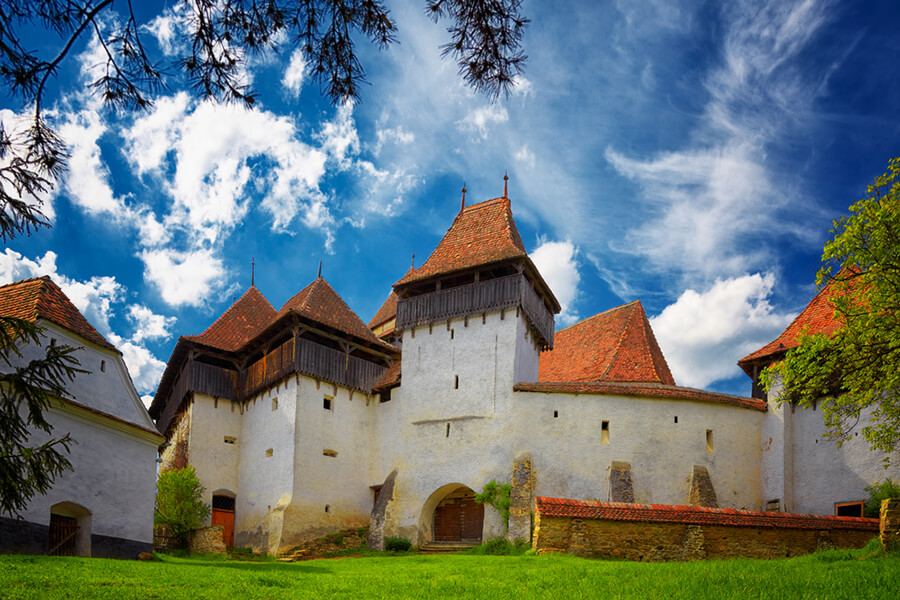 This fortified church in located in the Viscri village, Brasov County, Transylvania. It is a
  Located in Miclauseni, Iasi County. It is a Gothic-style palace built between 1880-1904 by George Sturdza. The castle had many valuable collections of books (over 60,000 pieces) and documents of the time, paintings, jewelry, medieval costumes, weapons, etc. Most of them were burnt by Russian soldiers.
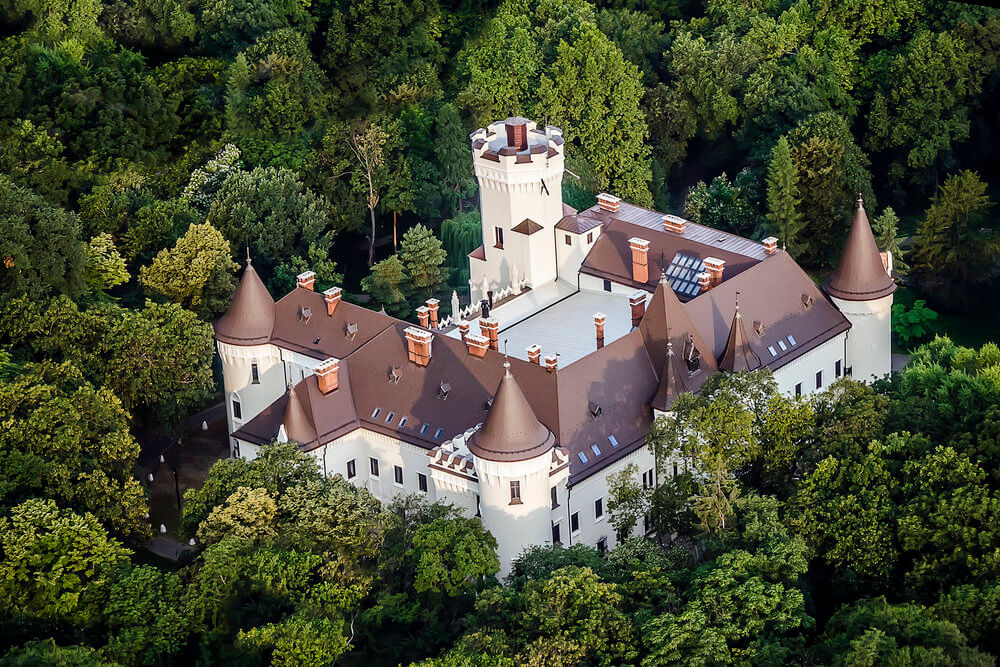 Located in Carei, Satu Mare County. The castle is named after an old noble family, the Károlyi family. Their first known residence here dates back to the end of the 15th century. It survived over the medieval era to several attacks from the Ottomans and other barbarians. It is considered as one of the best castles to visit in Europe as well.
 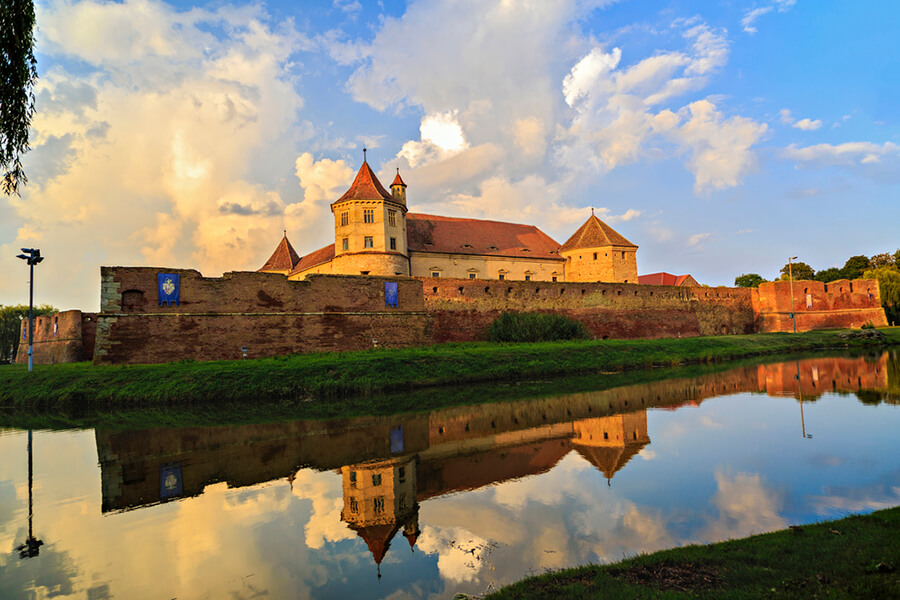 Built in 1310 on the site of a former wooden fortress, Fagaras (Brasov County) was enlarged between the 15th-17th centuries. It was considered one of the strongest fortifications in Transylvania. It also functioned as a residence for various princes and their families, such as Gabriel Bethlen (1613-1629) and Georg Rákóczi (1630-1649).
 The famous Black Church (Romanian: Biserica Neagra) rests in downtown Brasov, one of the largest Romanian cities (also a very touristy spot). It was built by the German community and stands as the main Gothic style monument in the country. The structure was partially destroyed during a fire set by invading Habsburg forces on April 21, 1689
 Rupea Citadel (Romanian: Cetatea Rupea) is one of the oldest archaeological sites in Romania, the first signs of human settlements dating from the Paleolithic and early Neolithic. The first documentary attestation dates from 1324 when the Saxons revolted against King Charles I of Hungary took refuge inside the citadel. Located also in Brasov County.
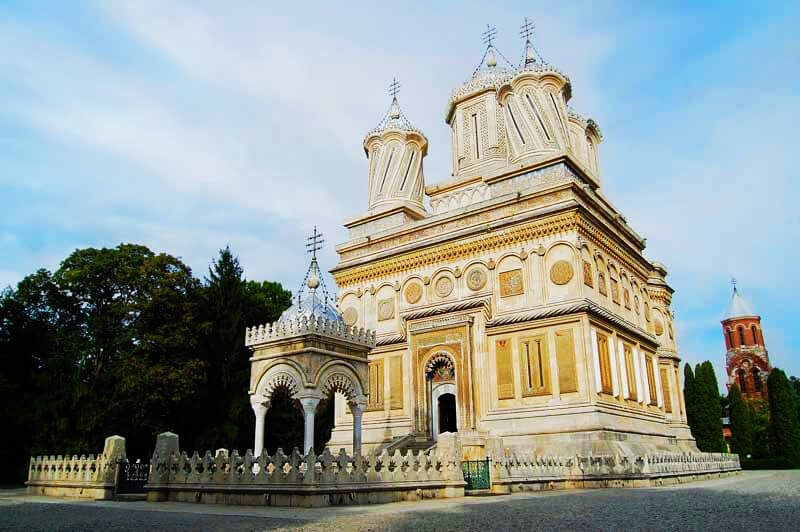 The legend says that this church was ordered by Radu Negru to be built by Architect Manole. With Manole being unable to finish the walls, the prince threatened him and his helpers with death. At last Manole suggested that they should follow the ancient custom of
 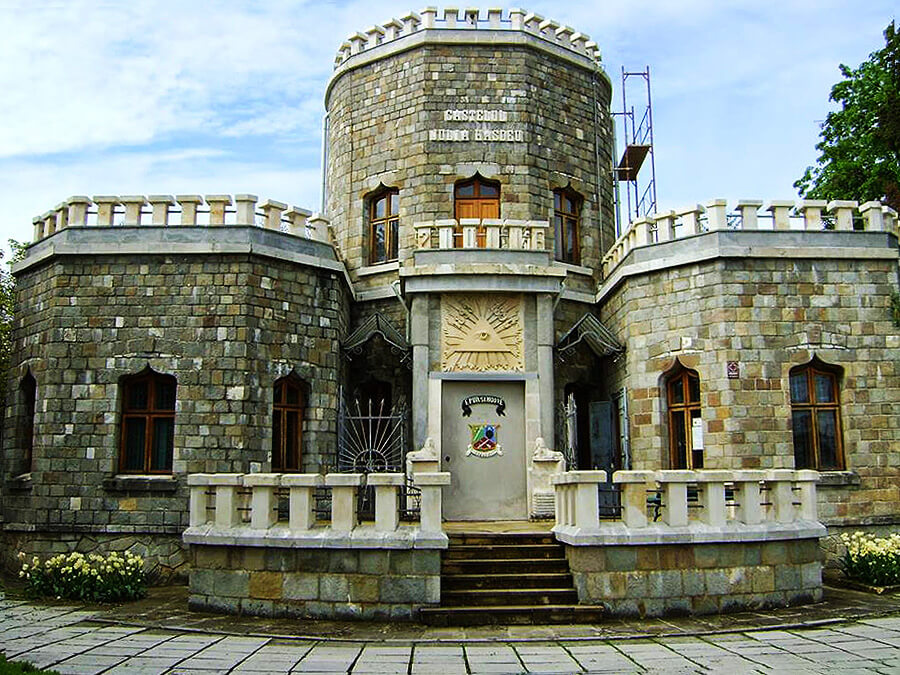 The Iulia Hasdeu Castle is a house built in the form of castle by historian and politician Bogdan Petriceicu Hasdeu in the city of Câmpina, Prahova County. Work on it began in 1893, after Hasdeu’s daughter, Iulia, died at the age of 19. The construction was finished in 1896.
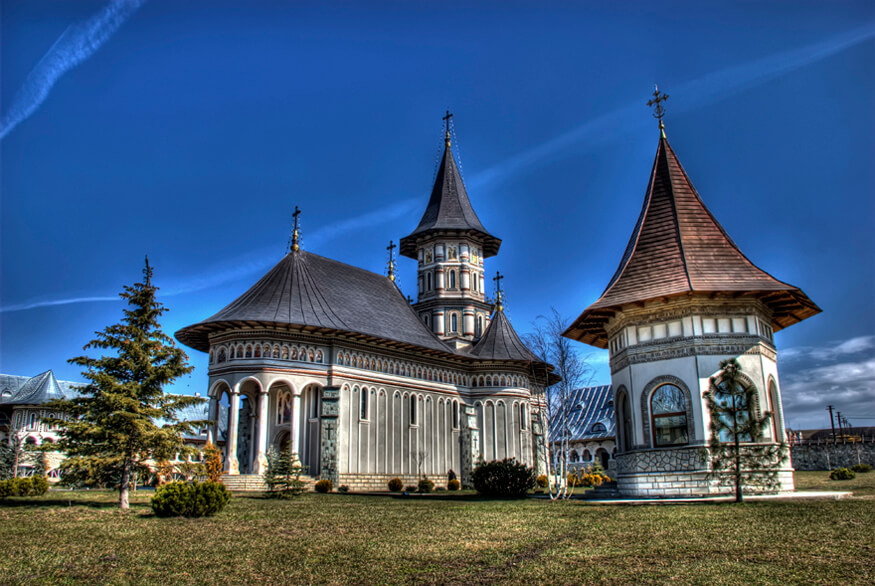 Located in Camarazani village, Suceava County, this monastery adds a drop of beauty to Bukovina. It was built in 1863 by Boier Emanoil Mortun.
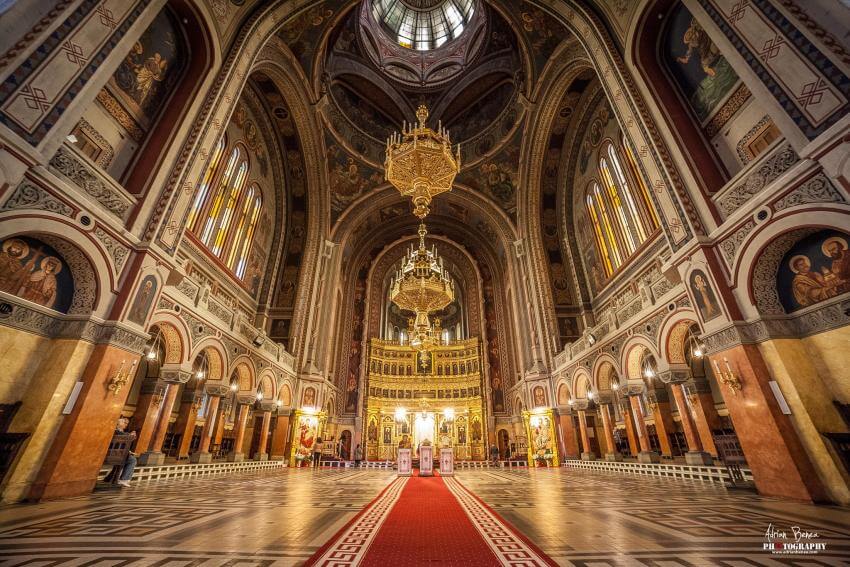 Timisoara Orthodox Cathedral (Romanian: Catedrala Metropolitana Timisoara) was raised between 1936 and 1941.The building’s style is Neo-Moldavian style, late Renaissance, Ottoman, and Byzantine architecture elements. Photo by Adrian Benea.
 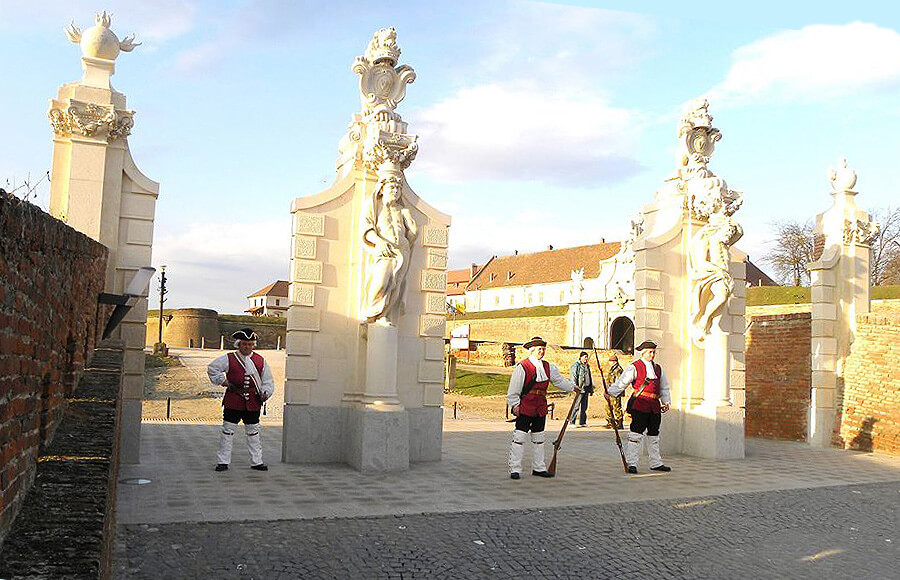 The Alba Carolina Fortress (Romanian: Cetatea Alba) encloses between its walls several centuries old attractions laden with history, including Saint Michael’s Cathedral. Cetatea Alba is located in the city of Alba Iulia, Alba County, and is the largest citadel in Romania.
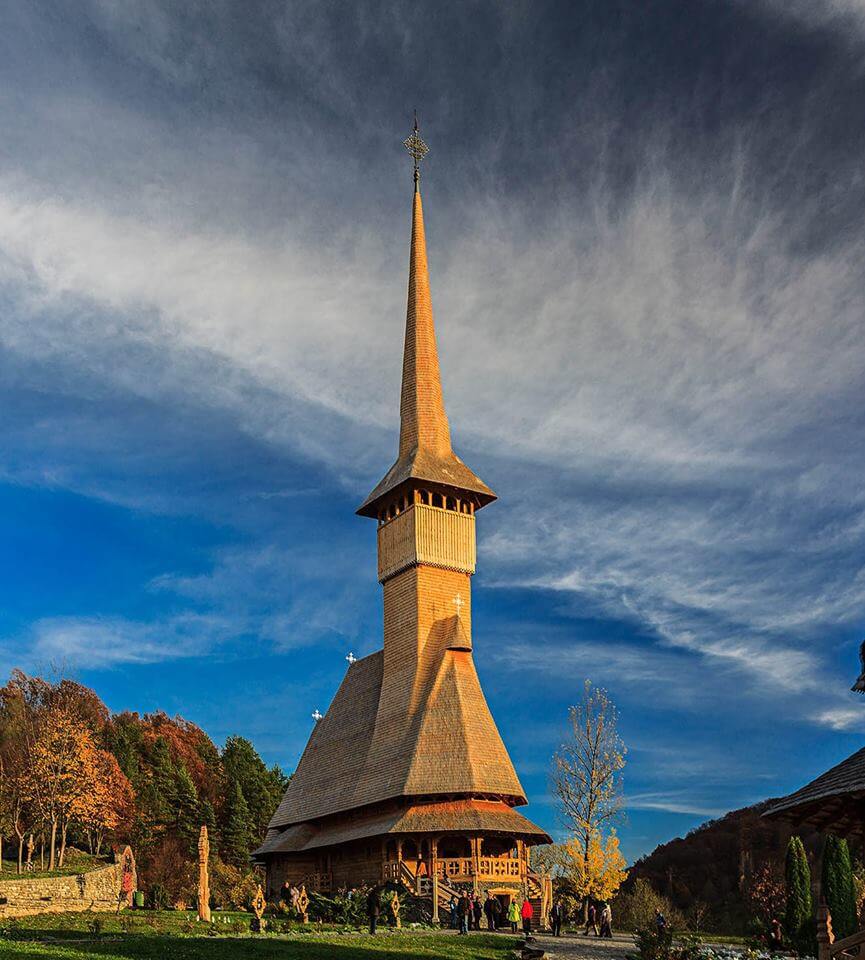 Barsana is one of the wooden churches in Maramures County, a beautiful synthesis of Eastern and Western European architecture, with Gothic and Byzantine elements. It was built in 1720. It is also a UNESCO World Heritage Site.
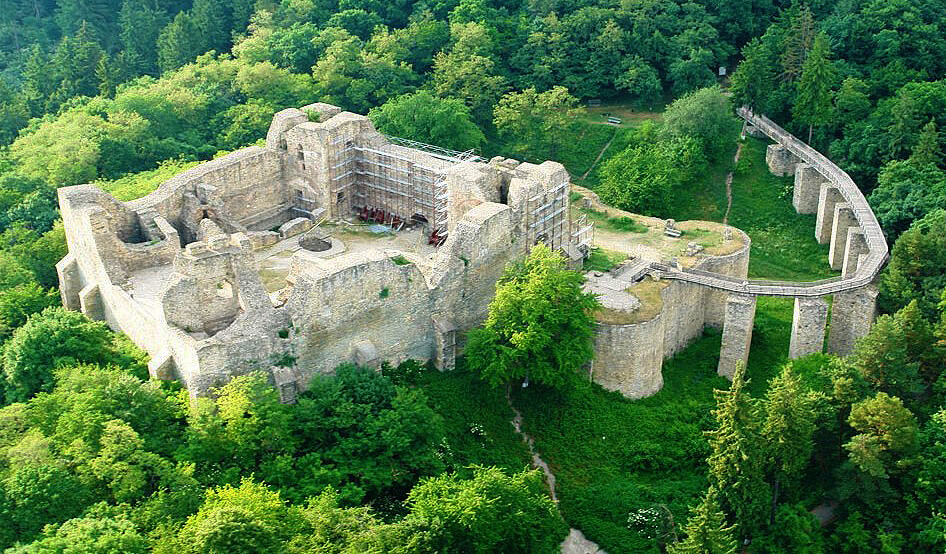 Neamt Citadel (Romanian: Cetatea Neamtului) is a medieval fortress located in north-eastern part of Romania, near Târgu Neamț, Neamț County. It was built in 14th century Moldavia during Petru I of Moldavia’s reign and expanded in the 15th century. The citadel played a key role in Stephen III of Moldavia’s defense system.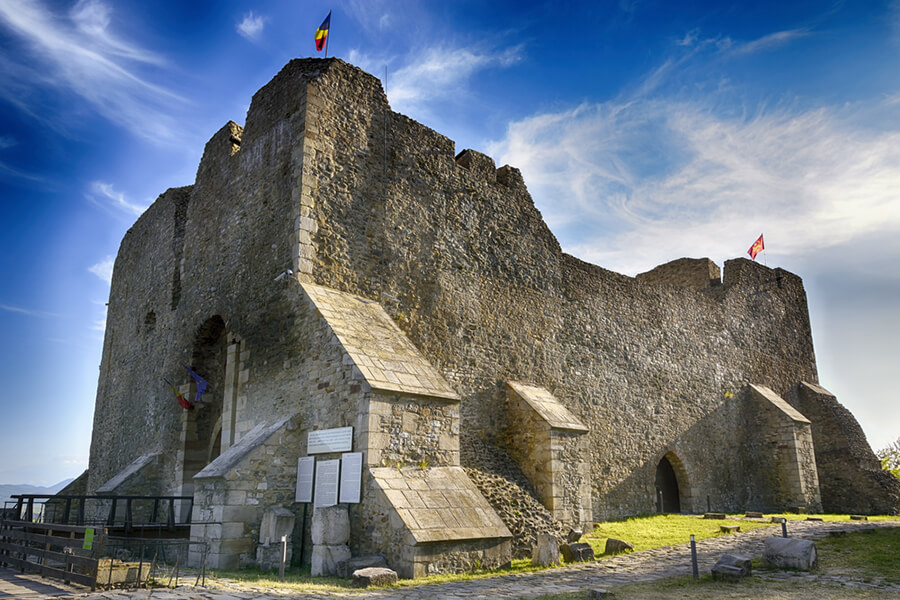
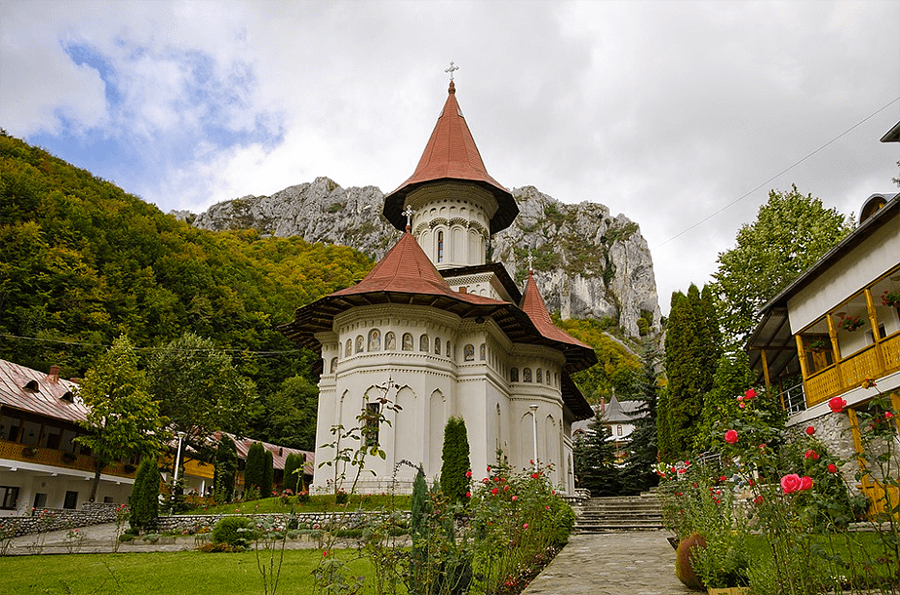 One of the oldest monasteries in Transylvania, Ramet stands out through its shape and boldness. It was built in 1214 and is located in Alba County.
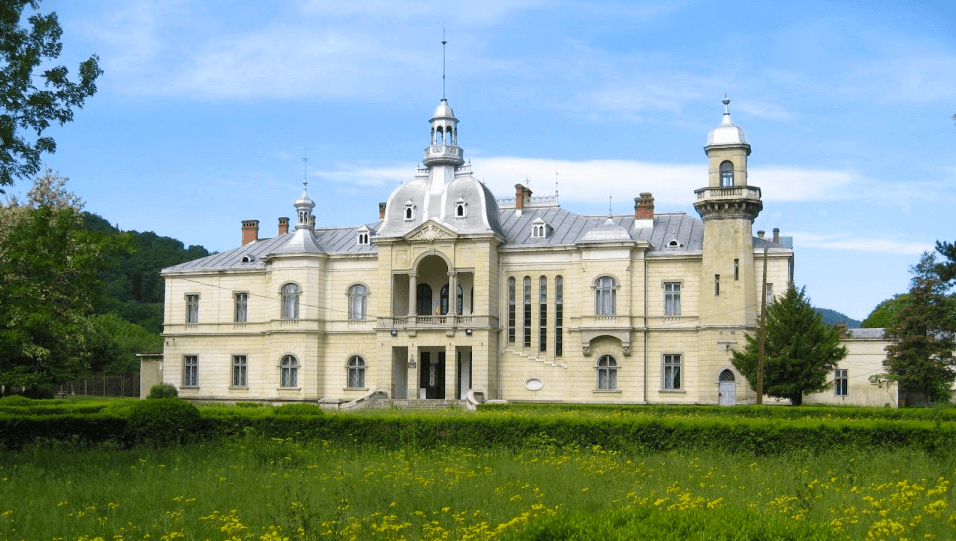 Ghika Palace is situated in Comanesti, Bacau County, was built in the last decade of the nineteenth century by Dimitrie N. Ghica, under the guidance of architect Albert Galleron, in baroque style.
 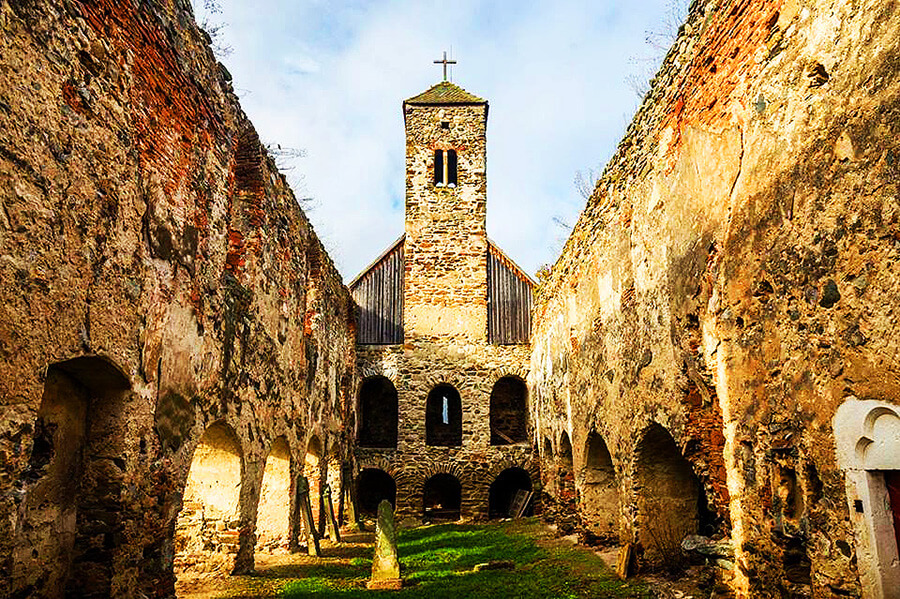 Cetatea Greavilor is located in Garbova, Alba County. It was built under Hungarian and German influence in the second half of the 13th century. In English, “greav” means earl, so the translation would be the Earls’ Fortress.
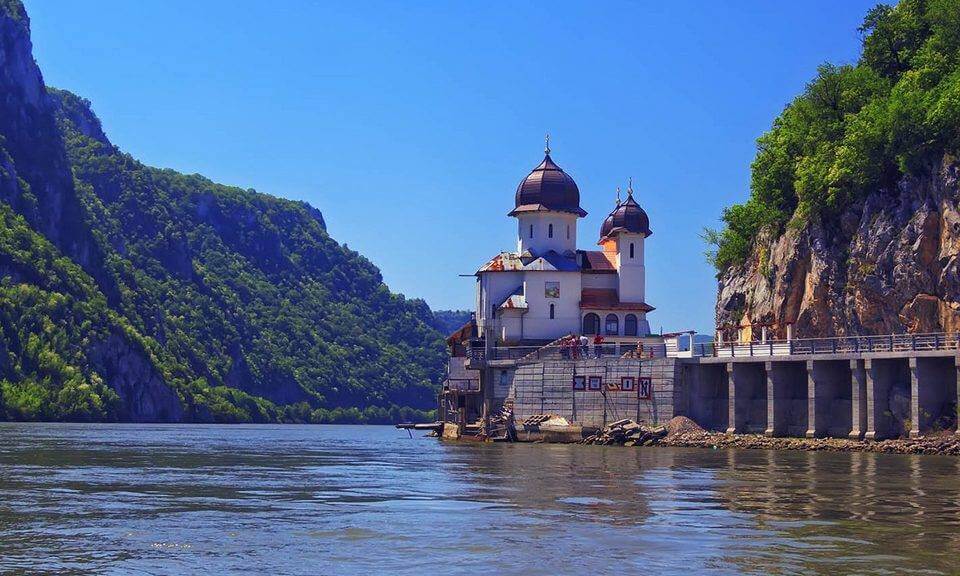 The church is located on the Danube River’s shore, in the Mededinti County, close to the border with Serbia. The place is called Cazanele Dunarii (“Danube’s Boilers”). The monastery was constructed in the late 1400’s, the exact date differing from one historian to another. “Mraconia” apparently means a place being hidden. The church is also known that during the Russian – Austro – Turkish battle (1787-1792) when it was almost destroyed.
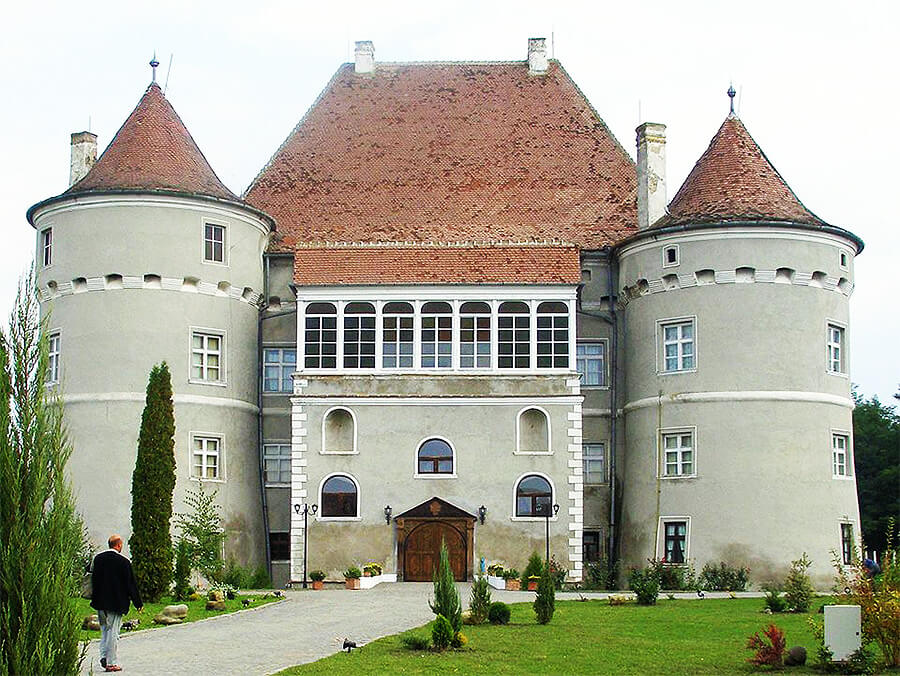 The Bethlen – Haller Castle is situated in Cetatea de Balta, Alba County. Built between 1570 and 1580, the castle was completely redone between 1615 and 1624 by count Stefan Bethlen who based his construction on the example of Chambord castle in France. It was built in the French Gothic style, on four levels, and its purpose was recreational. It is now owned by Necşulescu family, owners of
 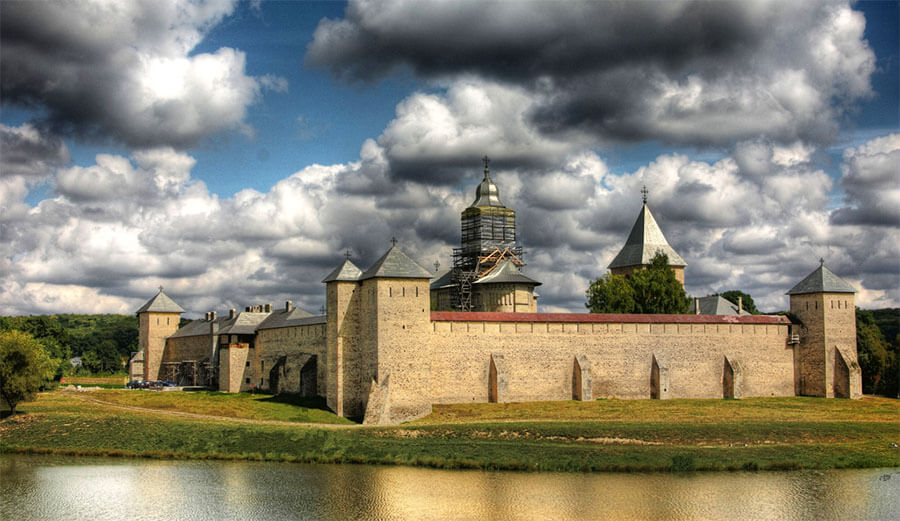 The Dragomirna Monastery was built during the first three decades of the 17th century, 15 km from Suceava, in Mitocu Dragomirnei village. It is the tallest medieval monastery in northern
 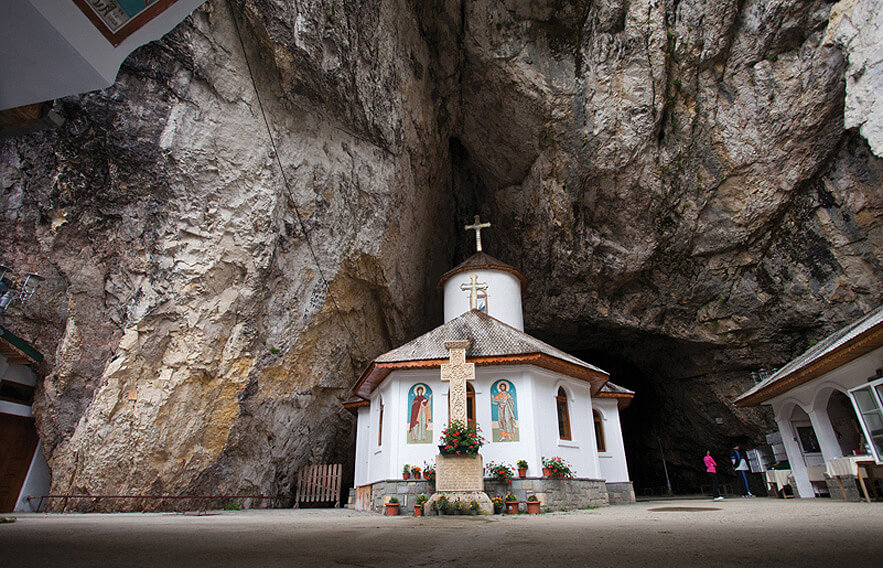 This church is located in Moroeni, Dambovita County. It is situated in a unique place, right into the Bucegi Mountains, which makes it the most visited monastery in the area. The legend says that at times the walls of the cave turn into mysterious girls that are holding hands and dance like the wind around the church.
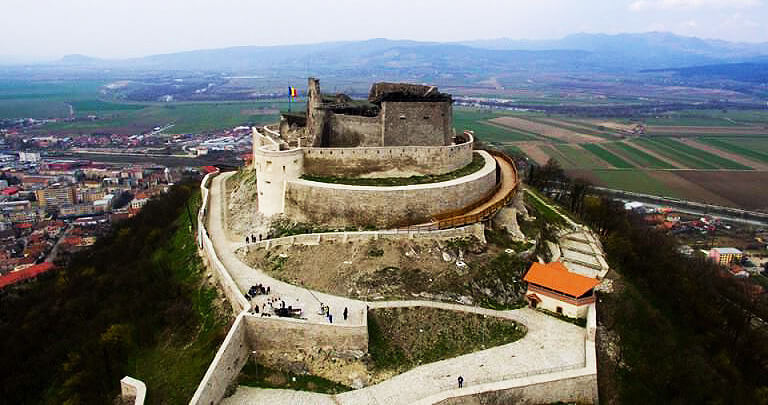 The fortress is located atop a volcano in the Poiana Ruscă Mountain Range within the Western Carpathian Mountains of Romania. From the foot of the hill, the city of Deva, Hunedoara County, spreads out. Deva Fortress was built in the 13th century.
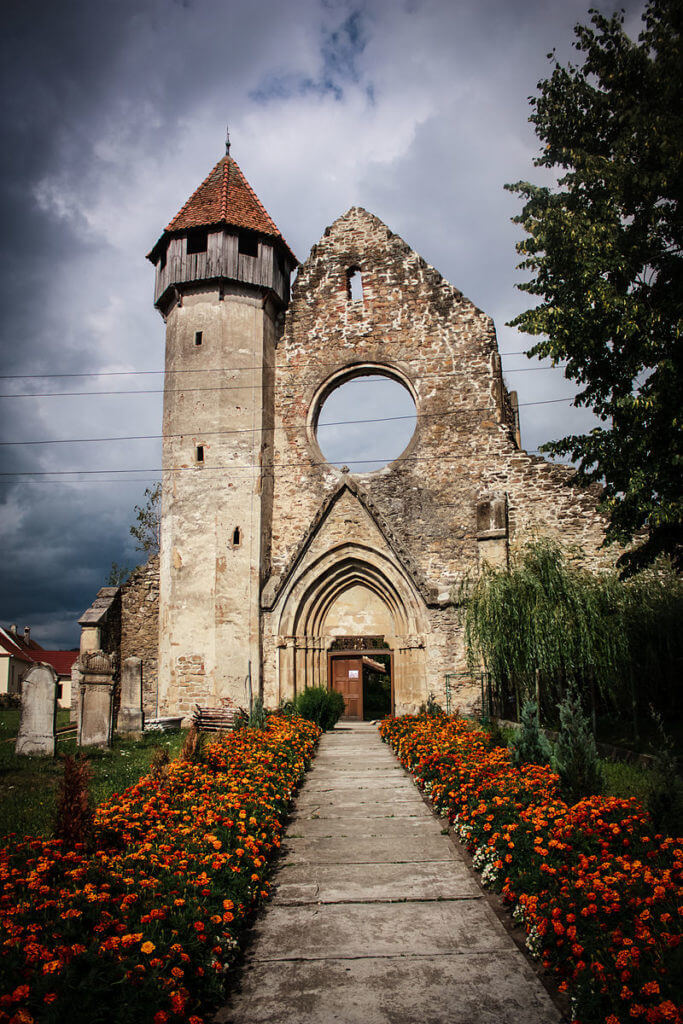 Located in Carta, Sibiu County, this church is a former Cistercian (Benedictine) monastery in the Ţara Făgăraşului region in southern Transylvania. It is currently a Lutheran Evangelical church belonging to the local Saxon community.
 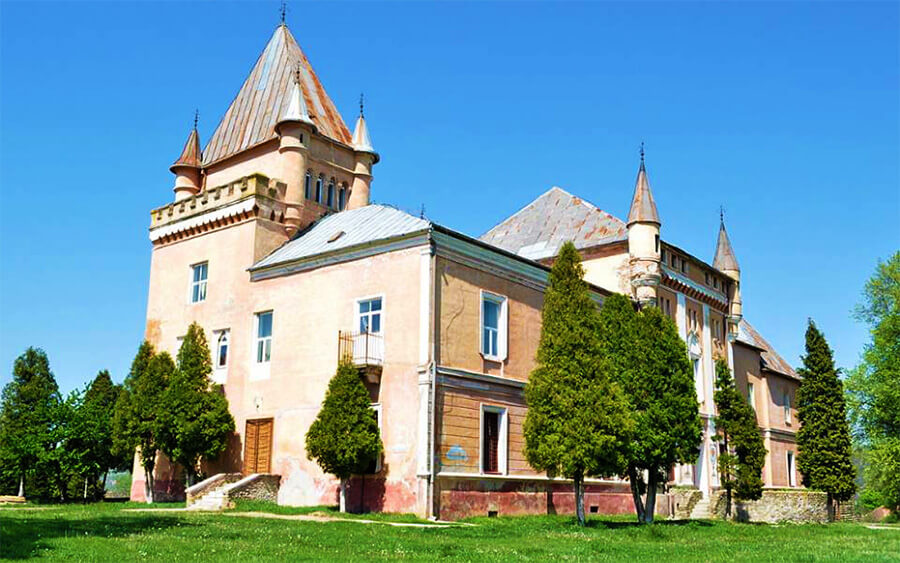 Kendeffy Castle is located in Sântămăria Orlea, Hunedoara County. It was built in 1782 by the Kendeffy Family, a noble family at the time. The castle was nationalized by the Communist Party in 1982, and in 1982 went to the Hunedoara County Administration, which turned it into a hotel.
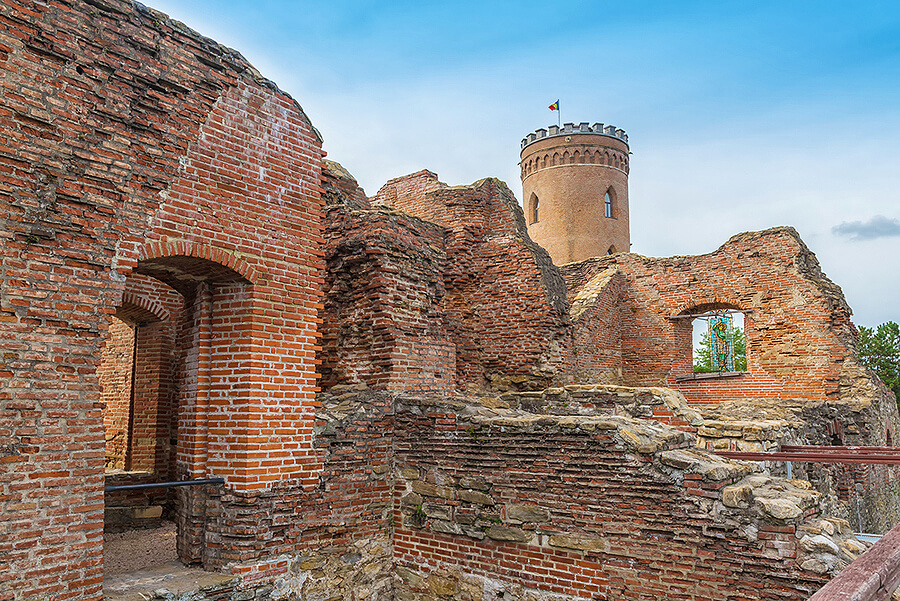 Chindia Tower (Romanian: Turnul Chindiei) is located in Targoviste, Dambovita County. It is the palace where Vlad Tepes (Vlad The Impaler) used to live. Built in the 15th century.
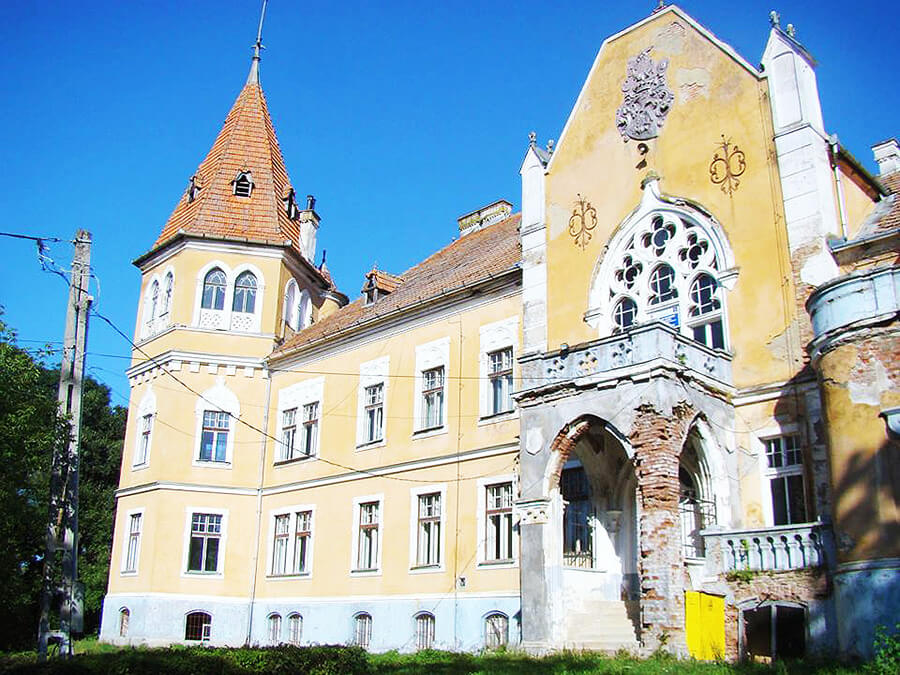 This castle is located in Zau de Campie town, Mures County, in 1911 by a baron called Istvan Ugron who was in love with a Russian princess. It was supposed to be an engagement gift, but the princess never came. The Castle is also known as the ‘Calendar Castle’ as was built based on the principles of a calendar. It has 365 windows as many days a year has, four towers as the number of the seasons, and 52 rooms as are weeks, 7 terraces as there are days in a week and 12 suites as are the months of the year.
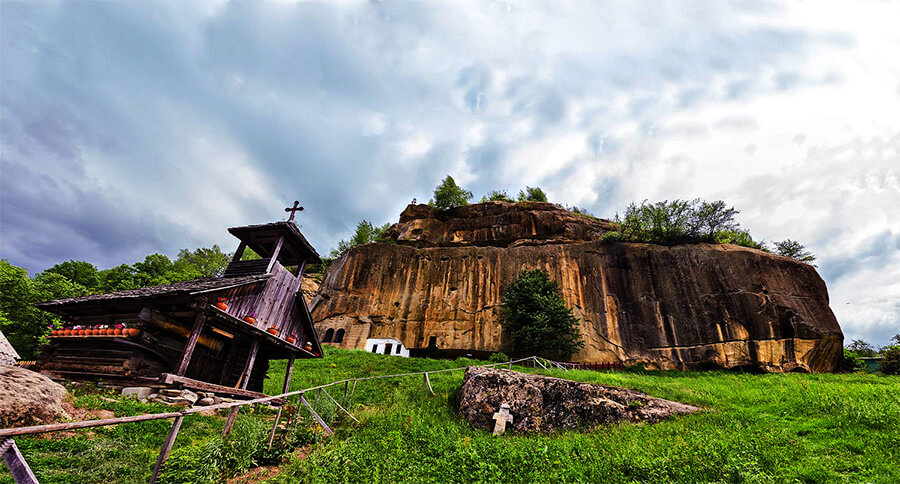 Corbii de Piatra is a unique monastic rupestral cave, located in Arges County, close to Corbi village, 33 kilometers away from Curtea de Arges. The first official attestation was on June 23, 1512. The settlement, carved into a massive yellow sandstone wall that used to be a hermits’ shelter, still keeps on its limestone walls one of the oldest paintings in Romania. Experts say the mural paintings are executed in the purest Byzantine tradition.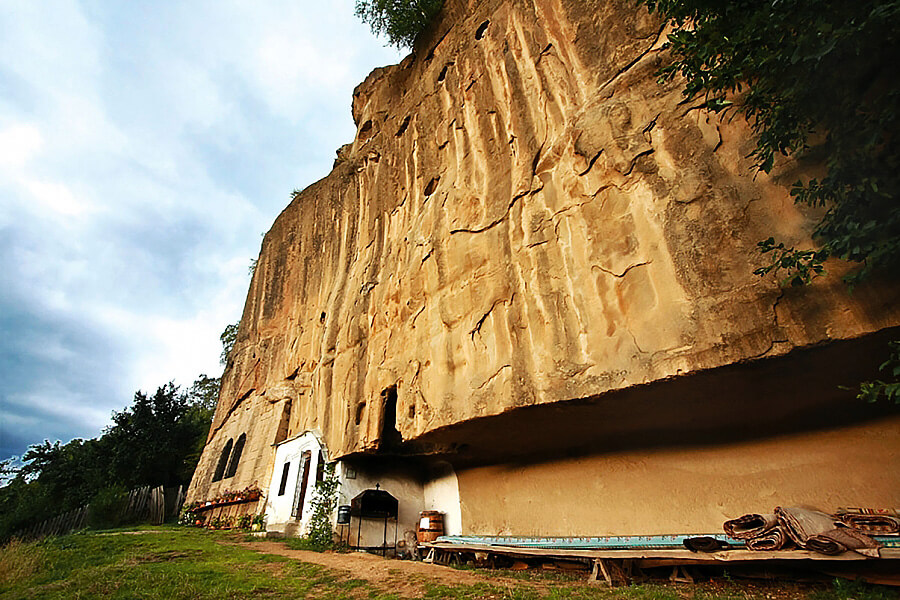
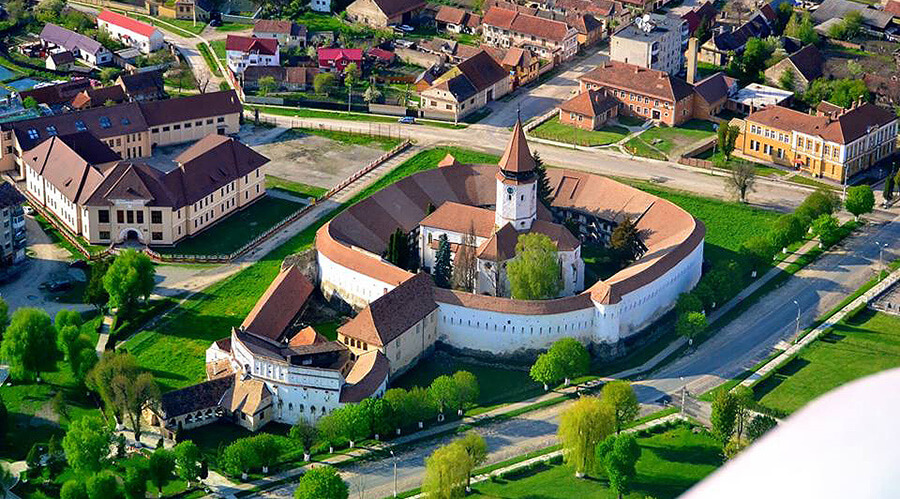 Prejmer Peasant Fortress (Romanian: Cetatea Taraneasca Prejmer) protects the fortified monastery inside. It’s been one of the best kept fortresses in the world, being in perfect shape. It was built in 1211 by the Teutonic Knights in a Gothic style.
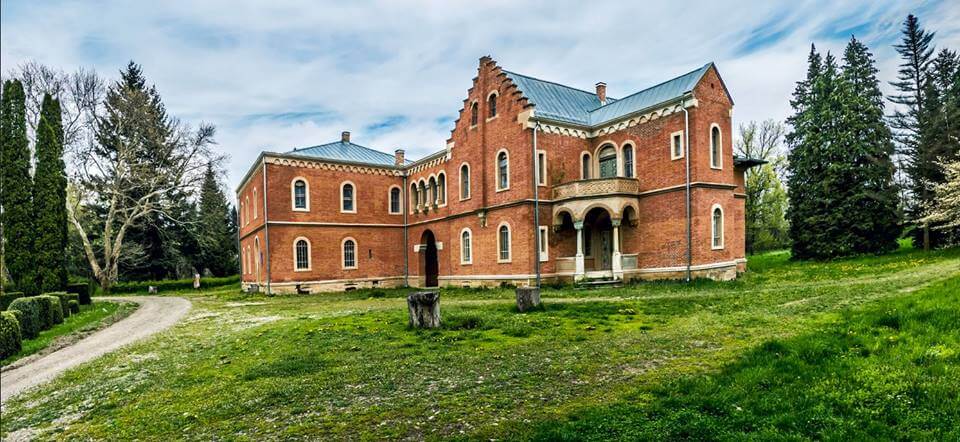 Built between 1864-1866 in vicinity of Bacau, the Red Castle (Romanian: Castelul Rosu) is not in use.
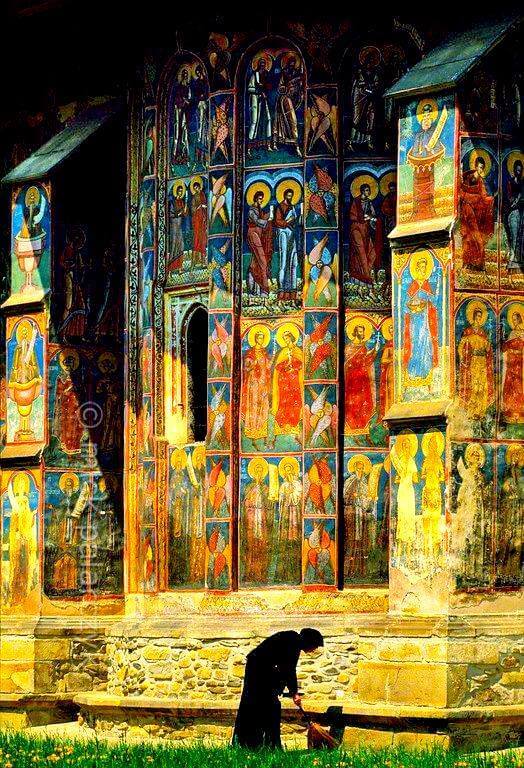 Another beauty from Bukovina, one of the painted monasteries. It is situated inVatra Moldoviței, Suceava County. The Monastery of Moldovița was built in 1532 by Petru Rareș, who was Stephen III of Moldavia’s illegitimate son.
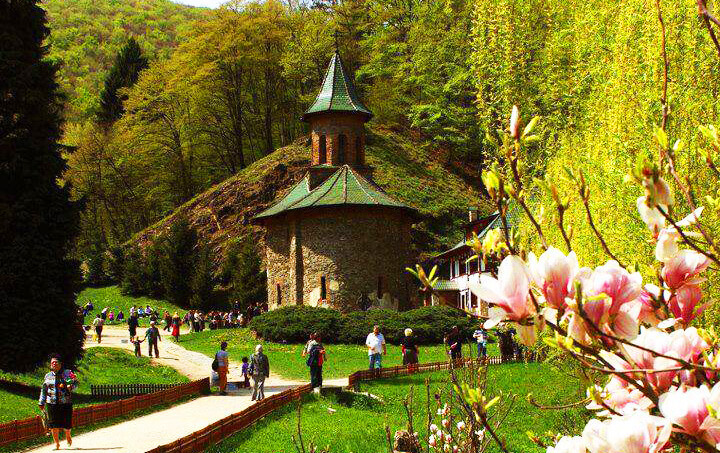 The Prislop Monastery is a place of pilgrimage for the Christian Orthodox believers from all over Romania. Most of them wish to pay respects to the grave of priest Arsenie Boca. It is said that arguably after visiting Boca’s grave miracles happen for the pilgrims.
 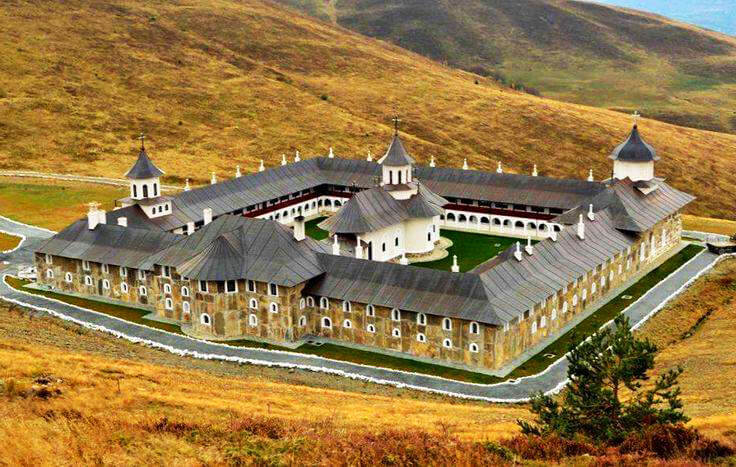 Situated at 1,300 meters above the sea level, in Alba County, the Ponor Monastery (Romanian: Manastirea Ponor) is considered the
 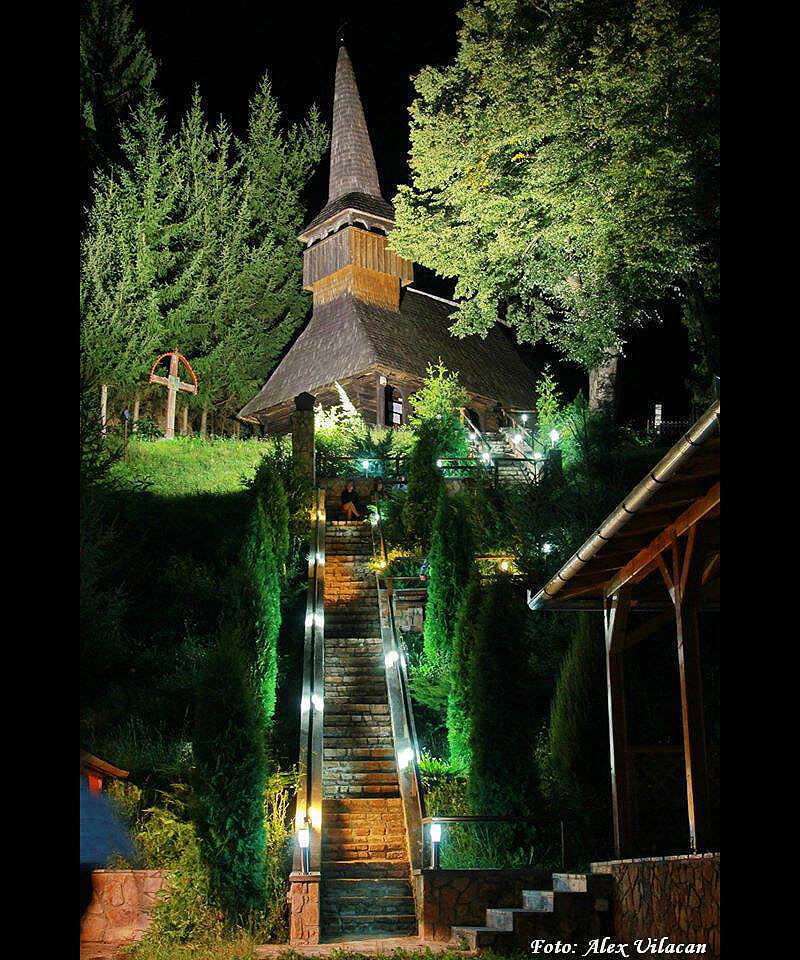 The Bucea wood church is located on Gorban Hill, Cluj County, and was built in 1791 by the first seven Orthodox families in the village (now with 705 inhabitants). The event is also engraved on a beam from the entrance to the church. The church, composed of the narthex, nave and altar, is made of oak wood.
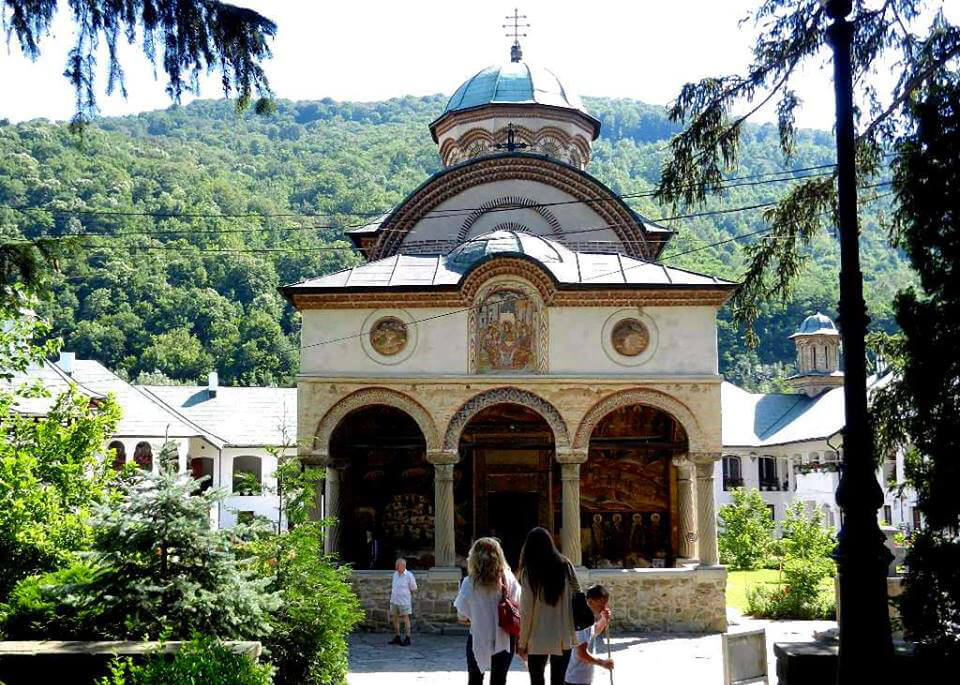 Cozia Monastery, built close to Călimănești – Valcea County today – by Mircea Cel Batran (Mircea the Elder) in 1388 and housing his tomb, is one of the most valuable monuments of national medieval art and architecture in Romania.
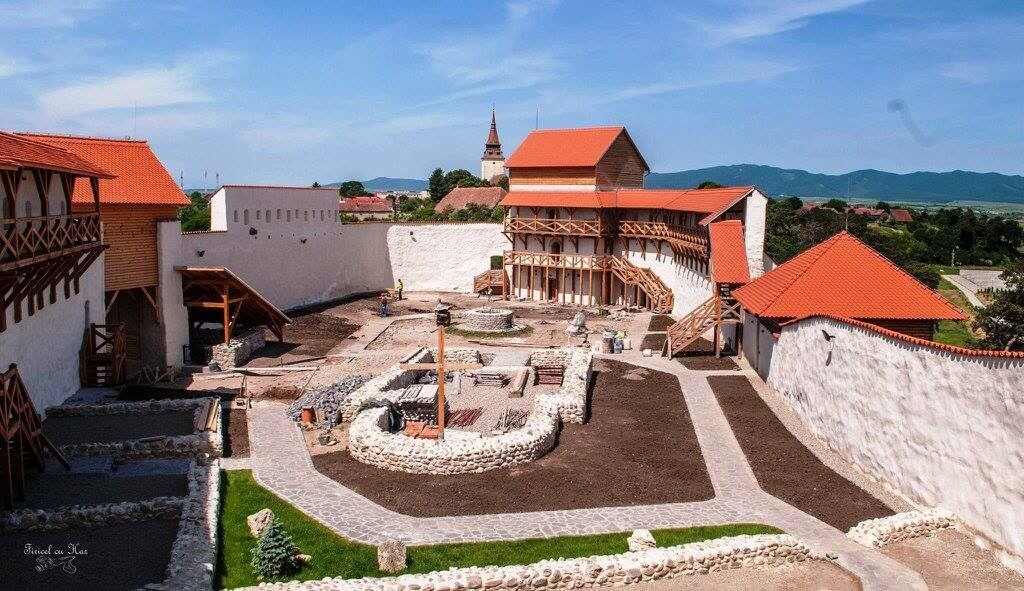 Feldioara Citadel, located 21 km North of Brasov, it is also known as the Teutonic fortress and is the oldest fortification in Barsa Land. It was officially attested in 1225. It was founded by the Teutonic knights between 1211 and 1225 and transformed into a peasant citadel later on in 1457.
  The Lainici Monastery (Romanian: Biserica Lainici) is located 32 km away from targu Jiu, Gorj County. First mention of this monastery was in 14th century. The monastery was constructed during the reign of John Voivode between 1812 and 1817.
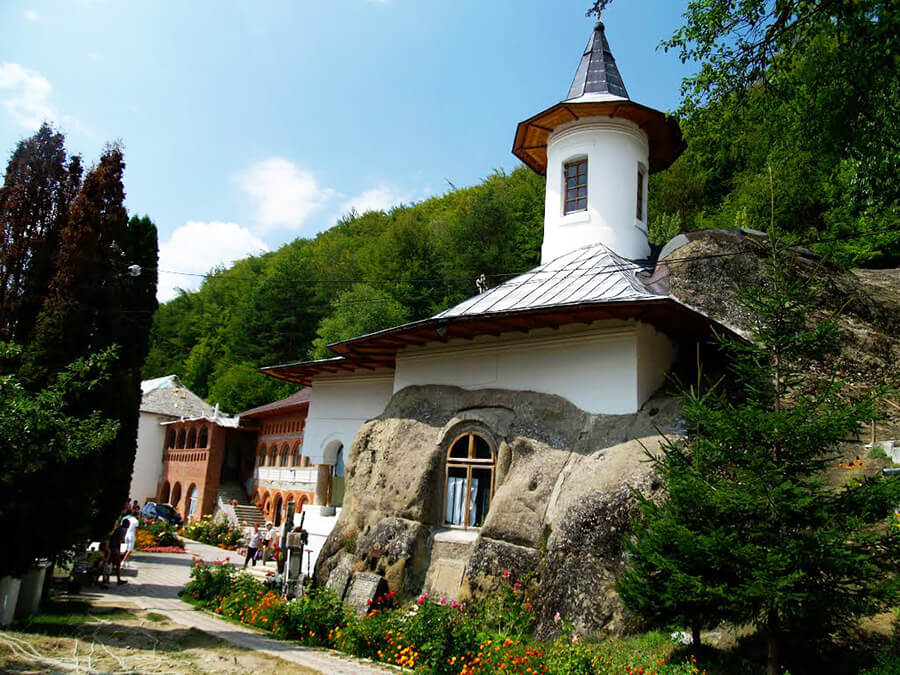 Some people claim Nămăeştii Church is the oldest convent in Romania. It is located in Campulung, Arges County. The monastery is a cave that houses an icon of the Virgin Mary that allegedly makes miracles (attributed to Luke tradition, framed in silver in 1798 and lithographed in 1871 by Major Papazogeu).
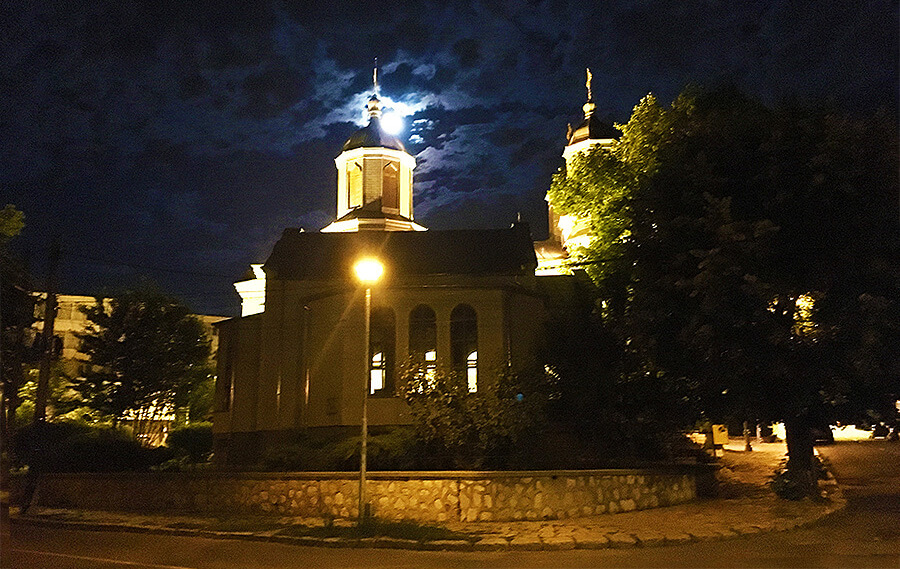 It was built in 1862 in Byzantine style. The Cathedral has countless valuable items inside, many of them covered in silver. This is it folks, thank you for taking the time to read my article. Feel free to drop a comment or subscribe to my newsletter here to be the first to get future articles. I am on my way to Indonesia –
